
What is a Lunar Eclipse?
Reading Time: mins
The Science Behind the Lunar Eclipse
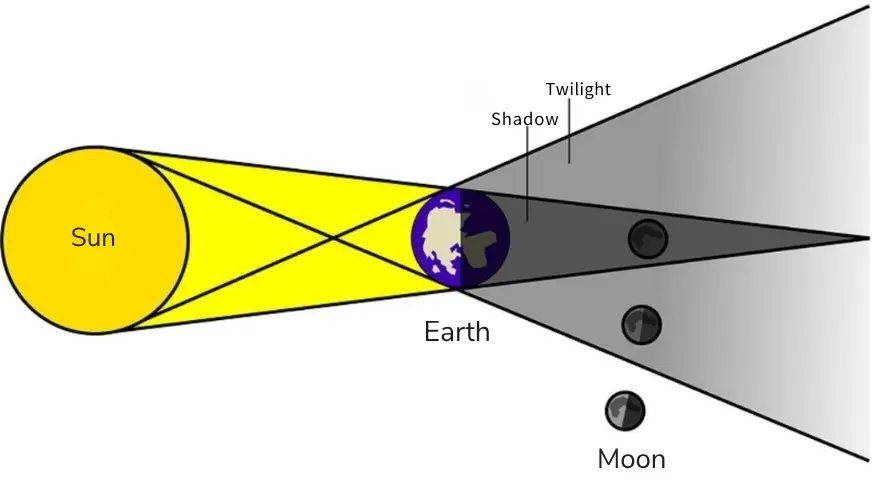
A lunar eclipse happens when Earth moves directly between the Sun and the Moon, causing Earth’s shadow to fall on the Moon. This only occurs during a full moon, when the three celestial bodies align in a straight line. When this happens, we get a spectacular view of the Moon slowly darkening and sometimes even turning a reddish colour.
Types of Lunar Eclipses
Total Lunar Eclipse: The entire Moon passes into Earth’s darkest shadow, the umbra. During this time, sunlight bends around Earth and scatters in its atmosphere, causing the Moon to appear red—a phenomenon often called a Blood Moon.
Partial Lunar Eclipse: Only part of the Moon enters the umbra, creating a dramatic contrast between the shadowed and illuminated sections.
Penumbral Lunar Eclipse: The Moon passes through Earth’s outer shadow, the penumbra, causing a subtle dimming of the Moon’s surface. This type is less noticeable but still fascinating to observe.
Why Do Lunar Eclipses Occur?
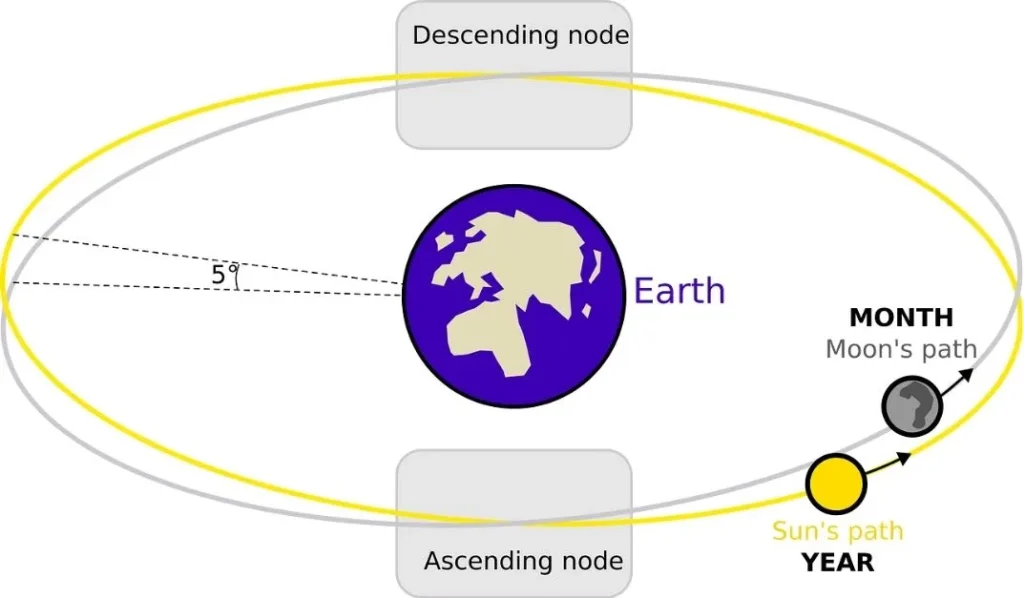
Lunar eclipses don’t happen every full moon because the Moon’s orbit is tilted about 5 degrees relative to Earth’s orbit around the Sun. Eclipses only occur when the Moon crosses Earth’s orbital plane at specific points called nodes, which is why they are relatively rare.
Observing a Lunar Eclipse
The best part? Lunar eclipses are completely safe to watch without needing any equipment. But, for a closer look, grab a pair of binoculars or a telescope. Watching the Earth’s shadow shift gradually across the Moon is a mesmerizing experience you won’t forget.
The Role of Lunar Eclipses in Astronomy
Lunar eclipses aren’t just amazing to look at—they also help scientists learn more about Earth and space. When Earth is directly between the Sun and the Moon, its shadow falls on the Moon. This gives scientists a chance to study Earth’s atmosphere. As sunlight passes through Earth’s atmosphere, it gets scattered by gases and particles. This scattering causes the shorter blue and violet wavelengths of light to be blocked, while the longer red and orange wavelengths pass through. That’s why the Moon looks red during a lunar eclipse.
This effect isn’t just a cool visual. It also helps scientists learn about Earth’s atmosphere. By studying the way the light changes, they can find out about the dust, pollution, and other particles in the air. This information is useful for understanding things like climate change, pollution, and even volcanic activity. When a volcano erupts, it sends ash into the atmosphere, which can affect how sunlight behaves during an eclipse. So, lunar eclipses aren’t just about watching the Moon; they also help us understand the world around us better.
Lunar Eclipses and the Moon’s Orbit
Lunar eclipses are a great way to learn about the Moon’s orbit and how it works with Earth and the Sun. Although lunar eclipses don’t happen all the time, they happen because of the Moon’s tilted orbit. The Moon’s orbit is tilted by about 5 degrees compared to Earth’s orbit around the Sun. This tilt means that lunar eclipses don’t occur every full moon. For an eclipse to happen, the Moon must pass through Earth’s shadow, which only happens when the Moon’s path crosses certain points in its orbit, known as nodes.

Lunar eclipses are rare because the movement of the Moon and Earth is so precise. The Moon’s orbit isn’t a perfect circle—it’s slightly oval, so sometimes it’s closer to Earth, and other times it’s farther away. This changes the size and length of lunar eclipses. Some eclipses are quick, while others are longer and more dramatic, depending on how close the Moon is to Earth at the time. By studying these events, astronomers can predict when and where the next lunar eclipses will happen. It also helps scientists understand the forces that control the movements of the Moon and other objects in space.
Check out our other mini blog on Solar eclipses here.
Mini FAQ
Q: How long does a lunar eclipse last?
A: The total duration can range from a few hours, with the totality phase lasting up to about 90 minutes.
Q: Why is the Moon red during a total lunar eclipse?
A: Earth’s atmosphere scatters blue light, letting red light pass through and illuminate the Moon.
Q: Can everyone on Earth see a lunar eclipse?
A: Only those on the night side of Earth can see it.