Understanding Solar Eclipses: Experience the Phenomenon
Reading Time: mins
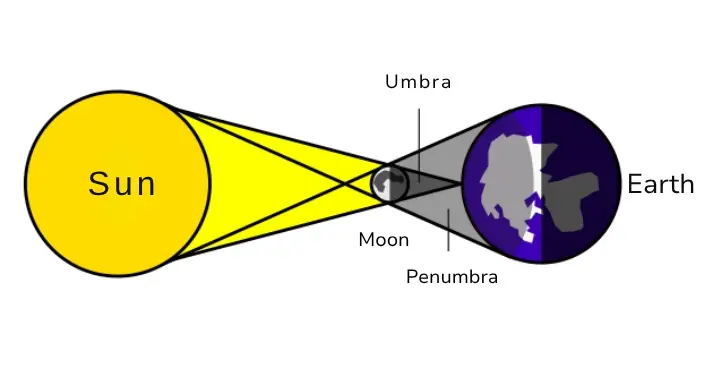
A solar eclipse occurs when the Moon passes directly between the Sun and Earth, blocking some or all of the Sun’s light. This phenomenon can only happen during a new moon, when the Sun, Moon, and Earth are in perfect alignment. Solar eclipses provide a rare opportunity to observe the Sun’s outer layers and experience the unique transition from daylight to twilight.
Types of Solar Eclipses
Total Solar Eclipse
In a total solar eclipse, the Moon completely covers the Sun, revealing the Sun’s outer atmosphere, the corona. Totality, when the Sun is fully obscured, can last up to several minutes.
Partial Solar Eclipse
A partial solar eclipse occurs when the Moon covers only part of the Sun, creating a crescent Sun effect. This type is more common and can be seen from a wider area.
Annular Solar Eclipse
During an annular solar eclipse, the Moon is farther from Earth and appears smaller, not completely covering the Sun. This results in a brilliant “ring of fire” around the Moon’s edges.
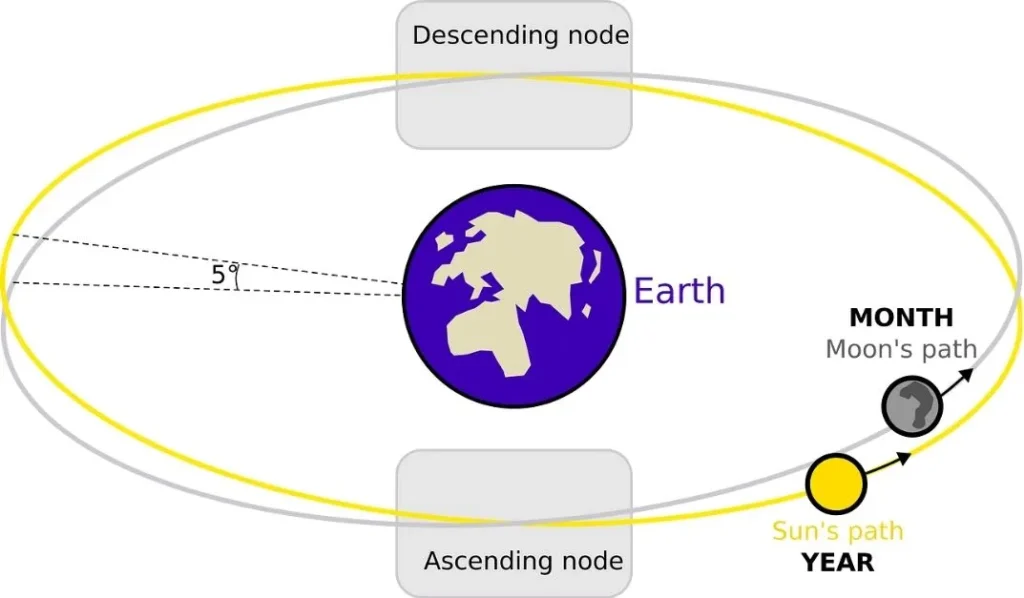
Why Do Solar Eclipses Occur?
Solar eclipses are rare because the Moon’s orbit is tilted relative to Earth’s. Eclipses only happen when the Moon’s shadow falls on Earth, which requires precise alignment.
Solar Eclipses and Wildlife Behavior
Solar eclipses can significantly influence animal behavior. As daylight diminishes, many animals exhibit changes, often initiating their nighttime routines prematurely. For example, daytime birds may return to their nests, while night-time creatures like crickets and frogs begin their evening songs. Studies during past eclipses have noted that approximately 75% of observed species displayed noticeable behavioral responses, ranging from increased sounds to signs of anxiety. These reactions provide unique opportunities for scientists to study how various species respond to sudden environmental changes.
Historical Significance of Solar Eclipses
Throughout history, solar eclipses have been profound events, often interpreted as omens or divine messages. Ancient civilizations crafted myths to explain these celestial phenomena. For instance, the Chinese believed a celestial dragon devoured the Sun during an eclipse, leading them to create rituals to ward off the beast. Similarly, in 585 B.C., a solar eclipse reportedly stopped a battle between the Lydians and the Medes, as both sides took it as a sign to cease fighting. In more recent history, the 1919 solar eclipse provided solid evidence for Einstein’s theory of general relativity, marking a pivotal moment in modern physics.
Safety Tips for Viewing Solar Eclipses
Never look directly at a solar eclipse without proper protection. Use solar viewing glasses or a pinhole projector to safely enjoy this spectacular event. Remember, even a partially eclipsed Sun can cause serious eye damage.
To find out about Lunar Eclipses check out our other mini blog here.
Frequently Asked Questions About Solar Eclipses
Q: How often do solar eclipses happen?
A: Globally, there are typically 2-5 solar eclipses per year. However, for a solar eclipse to be visible in a specific location, such as the UK, the alignment must occur along that region’s path of the Moon’s shadow, which happens far less frequently.
Q: Why is a total solar eclipse so brief?
A: The Moon’s shadow moves quickly across Earth, so totality usually lasts only a few minutes.
Q: Can I take photos of a solar eclipse?
A: Yes, but you’ll need a solar filter for your camera to protect your equipment and capture the event safely.