
Falling but Not Crashing: The Science Behind Satellites in Orbit
Reading Time: mins
How satellites stay in orbit
Satellites are everywhere—though you might not see them, they’re circling Earth right now, helping us navigate, predict the weather, and stay connected. But have you ever stopped to wonder: how do they stay up there?
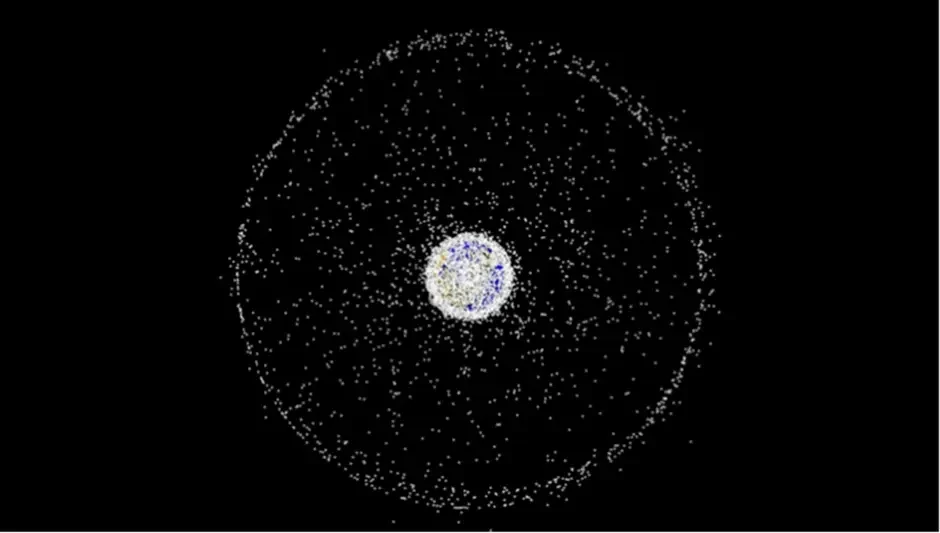
They’re not floating, and they’re certainly not hanging from anything. So, what keeps them from falling back to Earth? It’s not magic—it’s science. In this blog, we’ll break down how satellites manage to stay in orbit for years, why they don’t crash back down to Earth, and what makes their motion so precise. By the end, you’ll see satellites as more than just space tools—they’re engineering and physics in action.
The Role of Speed and Earth’s Curvature in Satellite Orbits
Imagine throwing a ball so fast that instead of hitting the ground, it keeps circling Earth. It might sound like science fiction, but this is exactly what satellites do every single day. These remarkable machines don’t hover or float—they’re actually falling continuously, but their incredible speed keeps them from ever hitting the ground.
Newton’s First Law of Motion explains this: ‘An object in motion stays in motion unless acted upon by an external force.’ Once a satellite reaches a certain speed, it continues moving forward unless something slows it down. While moving forward, the satellite must follow a path that aligns with Earth’s curved surface.
So why doesn’t it crash back down to Earth? The answer lies in its velocity. A satellite is launched with enough speed to match a path that follows the curvature of Earth. As it travels, it moves so quickly that Earth’s surface curves away beneath it. This creates a continuous free-fall around the planet, allowing satellites to stay in orbit for years—continually falling back down to Earth but never actually crashing into it.

Gravity’s Role in Falling but Not Crashing: How Satellites Stay in Orbit
Gravity acts as an invisible guide, pulling satellites towards Earth’s centre and keeping them in orbit.
For a satellite to stay in orbit, there must be a perfect balance between its speed and the pull of gravity. If the satellite moves too slowly, it will spiral downward toward Earth. If it moves too quickly, it can escape entirely and head into the vastness of space.
Imagine you’re skateboarding in a giant bowl at the skatepark. If you go too slowly, you’ll slide back down into the centre. If you go too fast, you might fly out over the edge. But if you keep just the right speed, you’ll glide smoothly around the bowl. For satellites, gravity acts like the walls of the bowl, constantly pulling them inward, while their speed keeps them looping around Earth in a steady path.
Types of Satellite Orbits and Their Functions
Satellites don’t all orbit at the same height. Their altitude and speed depend on their purpose:
Low Earth Orbit (LEO):
These satellites are closer to Earth, usually between 200 and 2,000 kilometres above the surface. They travel at speeds of about 28,000 kilometres per hour, completing an orbit in just 90 minutes. The International Space Station (ISS) operates in LEO, as do Earth observation satellites like Sentinel-2.

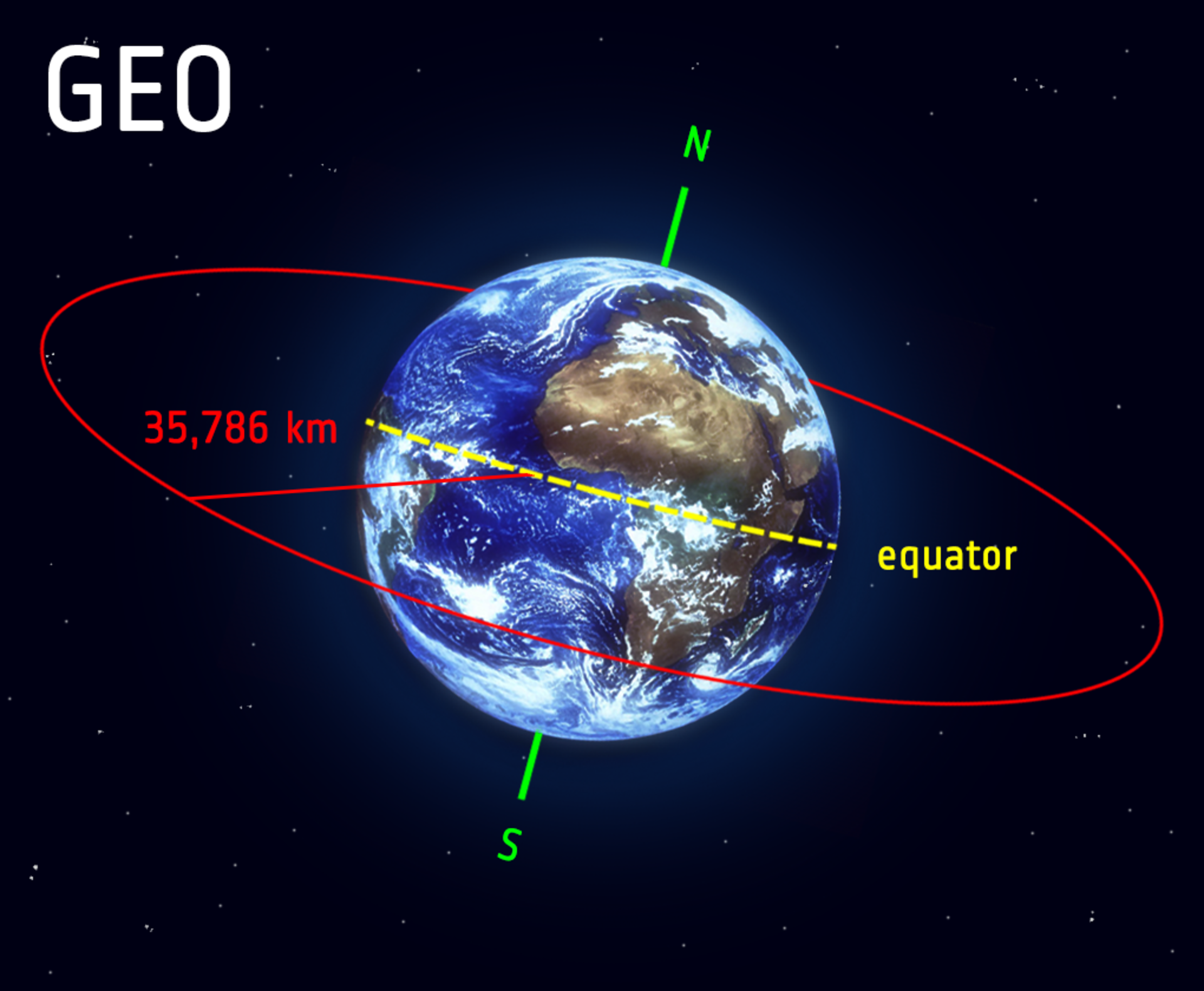
Medium Earth Orbit (MEO):
Satellites in this range orbit at altitudes of around 20,000 kilometres. They move at speeds of approximately 14,000 kilometres per hour. GPS satellites are a prime example of satellites in MEO, ensuring global navigation and positioning.

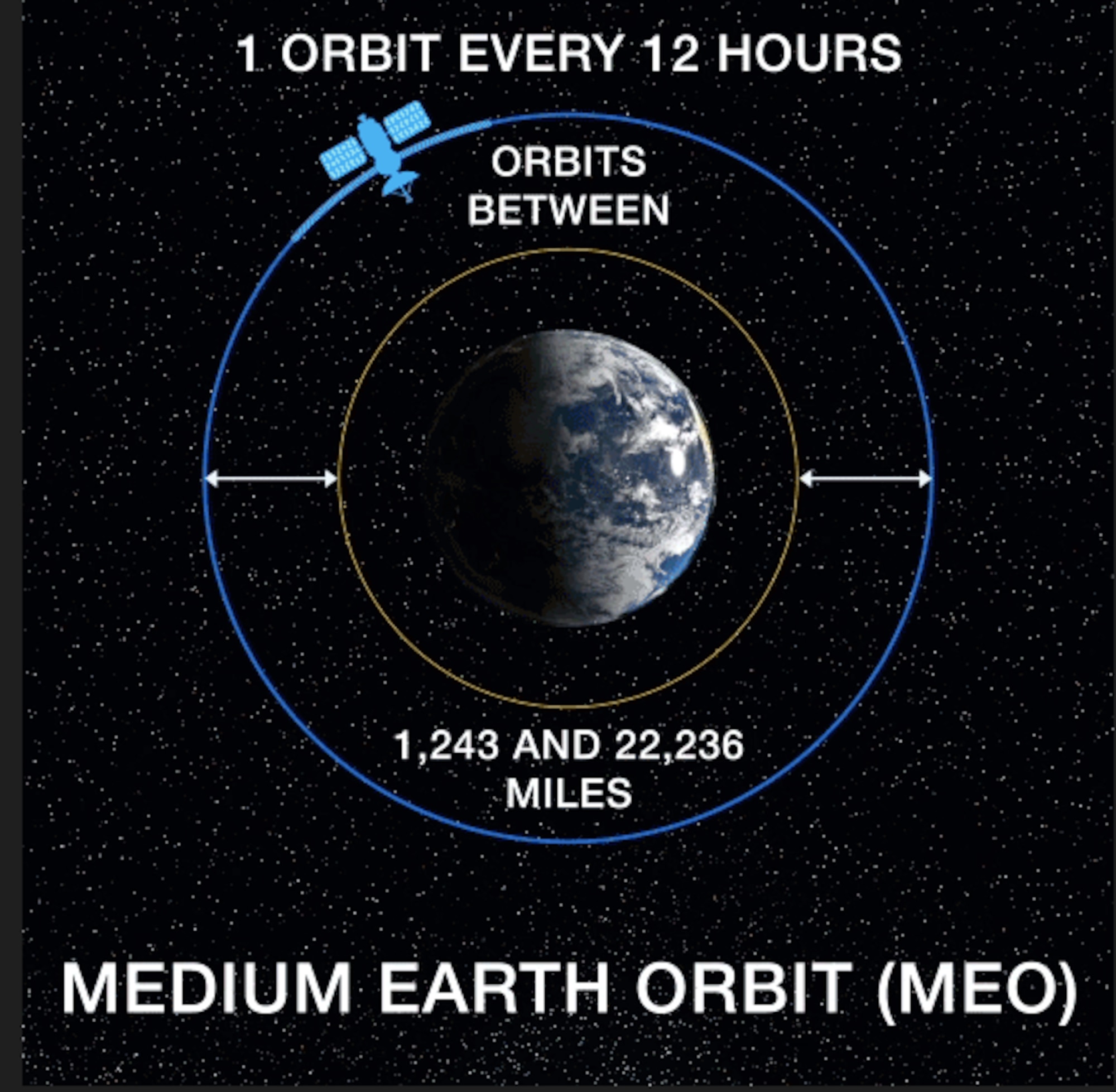
Geostationary Orbit (GEO):
Located about 36,000 kilometres above Earth, satellites in GEO travel at a slower pace of 11,000 kilometres per hour. This allows them to match Earth’s rotation, making them appear stationary in the sky. GEO is ideal for communication satellites and weather monitoring, such as the GOES satellites.
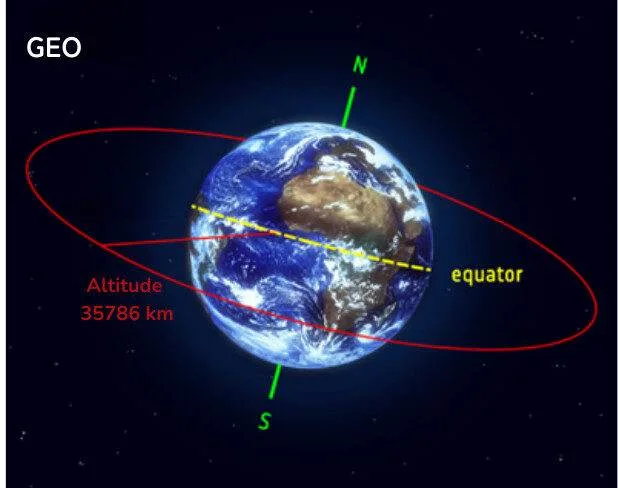
Image adapted from the European Space Agency
The choice of orbit depends on the satellite’s mission. For example, a weather satellite in GEO can continuously monitor the same region, while a spy satellite in LEO can capture high-resolution images of Earth’s surface as it moves quickly across the planet.
What Happens When Satellite Orbits Fail?
Satellites may seem like unstoppable high-tech marvels, but they’re not invincible. One of the biggest challenges they face is orbital decay, especially for satellites in low Earth orbit (LEO). Even at these high altitudes, there’s still a thin layer of atmospheric particles that acts like a brake, slowing satellites down. If no action is taken, the satellite eventually loses speed, drops altitude, and re-enters Earth’s atmosphere, burning up like a fiery meteor.
Another major risk is space debris. Defunct satellites, fragments of old rockets, and even tiny bolts hurtling through space can collide with active satellites, creating more debris in a destructive chain reaction called the Kessler Syndrome. This could make entire orbits unusable and jeopardize the technology we rely on daily.
To avoid these dangers, satellites are equipped with small thrusters to adjust their paths, dodge debris, and maintain their orbits. Engineers are also developing new technologies to clean up space debris, ensuring our orbits stay safe for future satellites—and maybe even space tourists.
Conclusion
Satellites stay in orbit thanks to a perfect balance between forward velocity and the pull of gravity. This delicate dance allows them to circle Earth continuously, enabling technologies that have become an essential part of our lives.
But the importance of understanding this balance goes far beyond keeping satellites in orbit. These same principles of gravity and velocity are the foundation of space exploration. They help us calculate the precise speeds and trajectories needed to send spacecraft to other planets or navigate complex systems like the moons of Jupiter. By mastering these concepts, engineers can build more efficient spacecraft and even plan for future space habitats that rely on stable orbits to stay in place.
One day, this knowledge might even allow us to live in space or travel to distant worlds. Could your understanding of orbital mechanics contribute to the next great leap in space exploration?
Blog written by Laura Ash for Mission Astro.