
Rocket Revolution
Reading Time: mins
The world is experiencing a Rocket Revolution. Here we’re exploring how reusable rockets and new space launch vehicles, as well as commercial spaceflight are transforming access to space. All of these coupled with falling launch prices means space is becoming more accessible than ever before.
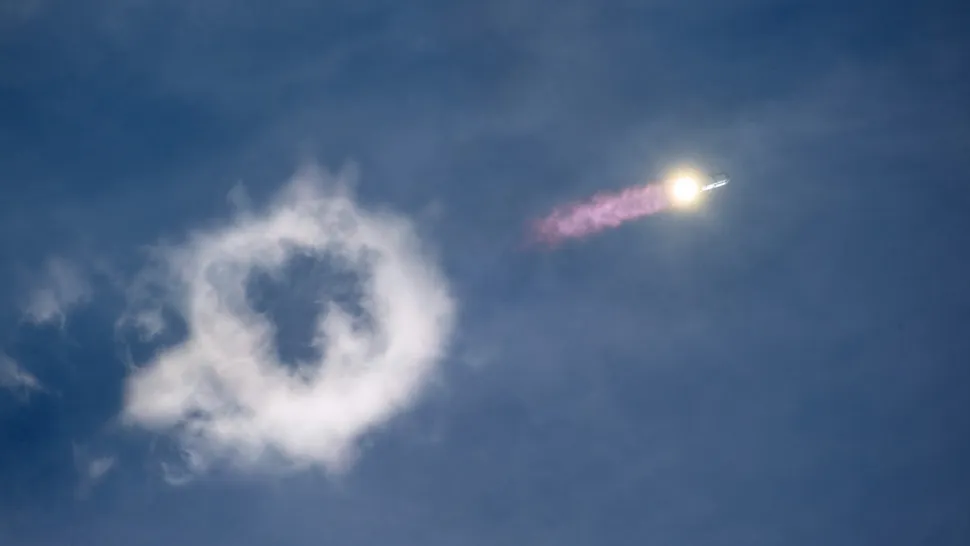
How are things changing?
Historically space exploration required enormous amounts of hardware, fuel and infrastructure, using rockets that were designed only to fly once. However, this model is changing drastically.
Reusable rockets are becoming much more common; space companies have demonstrated that large portions of a launch vehicle can return to Earth to fly again. There is also a huge increase in the number of commercial companies and countries that are developing new and innovative ways to launch satellites, spacecraft and even humans into space. Rockets aren’t simply getting bigger, they are being designed with different architectures and reusability which changed the economics and cadence of spaceflights.
Thus, we are now seeing a wider range of missions and more participants in the space industry, over a huge range, from communications and Earth-observation satellites to scientific spacecraft and human spaceflight. This is resulting in an expanding ecosystem of satellites and spacecraft, which already plays a role in everyday life. Satellites already provide communications, navigation, weather information and Earth-observation data, and they are also increasingly being used for environmental monitoring, disaster response and connectivity.
Reusable rockets are poised to transform the space industry by bringing about profound, game-changing benefits in cost efficiency, sustainability and technological advancement. By significantly reducing the cost of transportation to space, these innovations could make space more accessible than ever before and enable a new era of commercial and scientific exploration.
Reusable rockets
How Do Reusable Rockets Work?
Fully reusable rockets function by incorporating cutting edge technologies that allow them to return to Earth intact. This means they can be launched, recovered, refurbished and relaunched multiple times. Rockets consist of stages that separate during its ascent. Traditional rockets then discard these stages after they have been used. Whereas reusable rockets utilize advanced technologies, including flight control surfaces, landing legs, grid fins for atmospheric control, heat shields, thrust vector control and sophisticated flight software to bring them safely back to land on Earth. One example is the Falcon 9, which performs a controlled descent and vertical landing on drone ships in the ocean.
All the components which have been recovered, undergo inspection and refurbishment to enable them to be launched again. Reusing hardware instead of building new rockets for each mission maximises efficiency, minimises waste and increases launch frequencies.
The Space Shuttle was designed to be reusable, however fully and rapidly reusable launch systems at more affordable prices was thought impossible because of technology limitations. However, these limits are being broken, ushering in a new more affordable space exploration era.
Advantages of reusable rockets:
- Economics:
The cost of rocket launches have dropped by 96% since 1960. New studies predict that costs have the potential to plummet by nearly as much again by 2040. The average cost of sending 1kg into orbit in 1960 was £64990 whereas today it is only £2889. Predictions for future launches are under £75 per kg. This huge reduction in cost throws open space exploration for commercial and scientific reasons. This increased competition drives technological advancement, as well as helping extend the benefits of space exploration back to Earth. These range from improved communication networks through to in-space manufacturing and mining and advancements in climate monitoring and disaster response.
- Sustainability:
Reusable rockets have the potential to significantly reduce pollution and environmental impact compared to single use rocket launches. Reusing rocket components reduces the environmental footprint which is created from the raw material extraction, processing and manufacturing. Traditional rockets discard hardware in Earth’s orbit and oceans, whereas reusable rockets significantly reduce this discarded waste.
- Reliability and safety:
Reusability can increase reliability over time as rockets undergo more frequent flights, refining designs after each flight, and identifying and fixing minor issues, thus enhancing overall safety and leading to more reliable systems. However, in-depth checks need to be carried out between each launch to ensure safety and reliability is maintained, as components undergo extreme wear and tear during each launch.
Here are a few of our favourite reusable rockets.
- Space x – Falcon 9
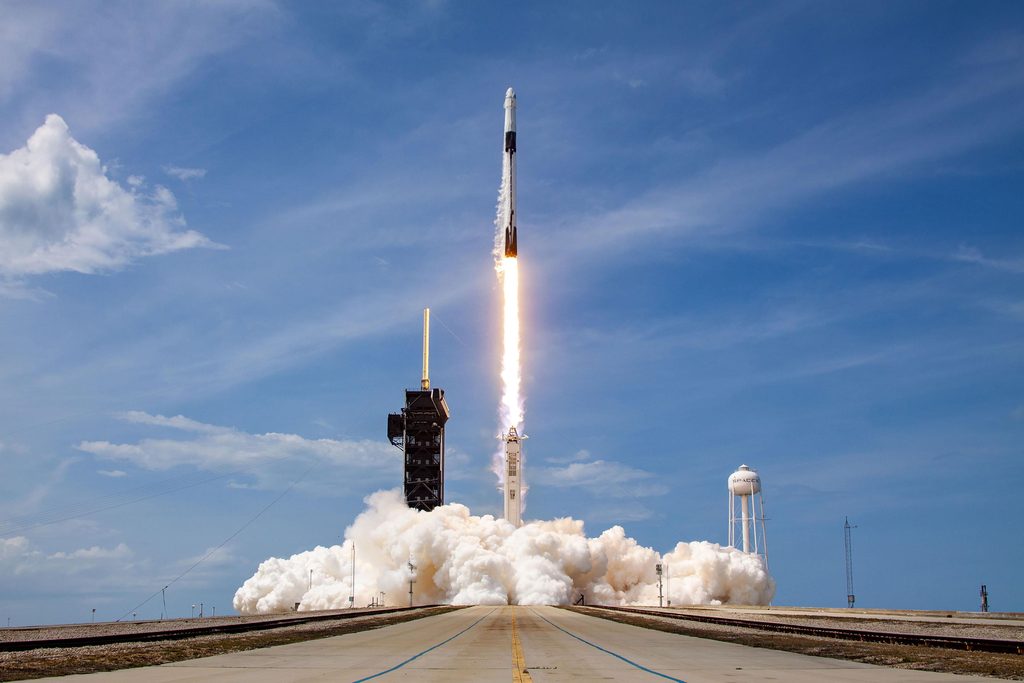
Falcon 9 is the world’s first orbital class reusable rocket. It is a two-stage rocket, designed for the reliable and safe transport of payloads and humans into LEO and beyond. Falcon 9 is on NASA’s Launch Services II contract.
| Height | 70m |
| Diameter | 3.7 m |
| Mass | 549,054kg |
| Payload to LEO | 22800kg |
| Payload to GTO | 8300kg |
| Payload to Mars | 4020kg |
- Rocket Lab’s Electron
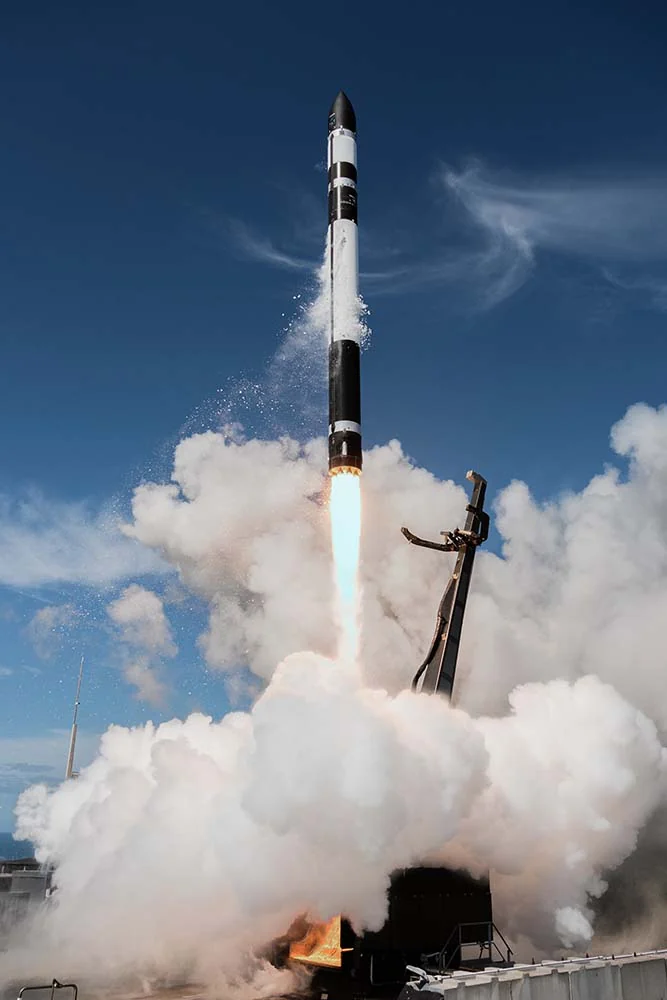
This is the only reusable orbital-class small rocket. Electron’s unique Kick Stage has been developed to deliver small satellites into precise and unique orbits, this could be as dedicated launches or rideshare. Some of the key features include; deploying of payloads at multiple planes/inclinations, deploying payloads at higher altitude, hosted payload support, undergoing multiple trajectory changes, sustained low altitude orbits, and even deorbiting payloads to reduce space debris.
| Height | 18m |
| Diameter | 1.2m |
| Stages | 2+kick stage |
| Wet Mass | 13,000kg |
| Payload to LEO | 300kg |
| Structure | Carbon Composite |
| Propellant | LOX/Kerosene |
- Starship
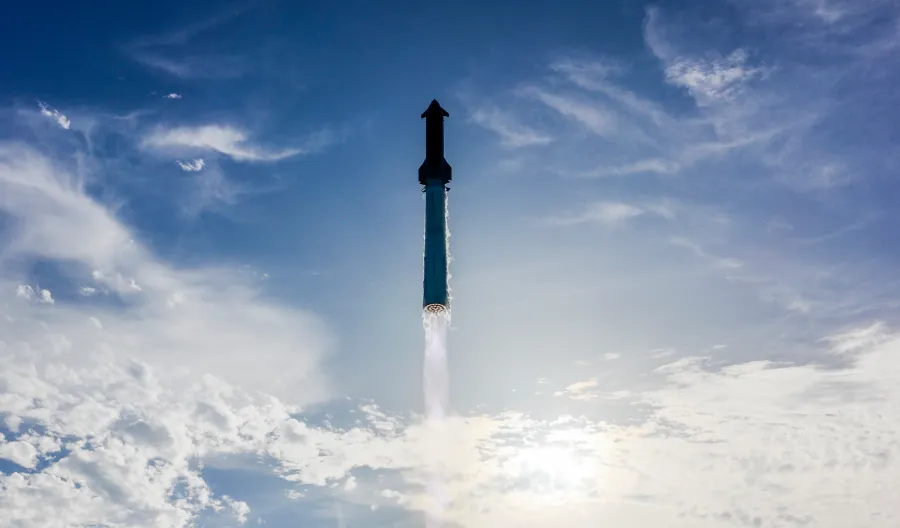
SpaceX’s Starship is a fully reusable transportation system which is capable of carrying both crew and cargo to Earth orbit, the Moon, Mars, and even beyond! This is the world’s most powerful launch vehicle. It is designed to be capable of carrying over 100 metric tonnes to orbit.
| Height | 124m |
| Diameter | 9m |
| Payload capacity | 100+tones |
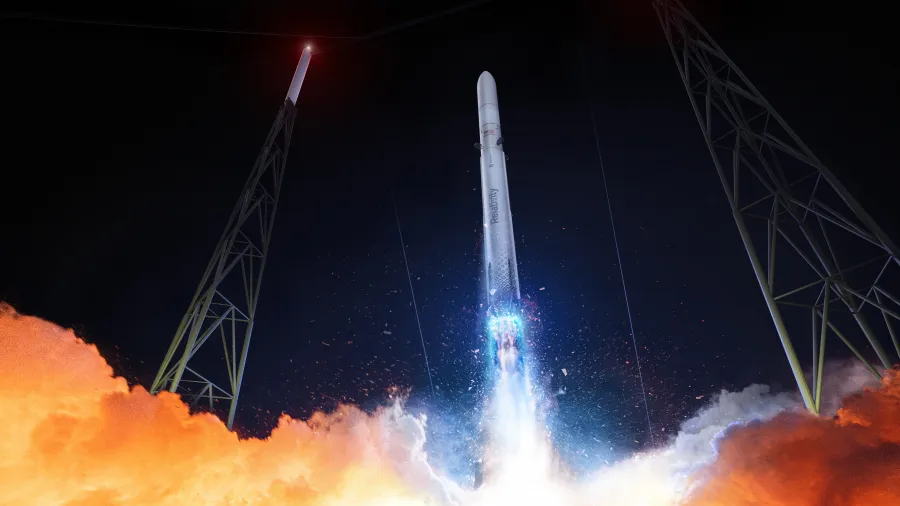
- Terran R
Relativity Space’s Terran R is a two-stage, reusable rocket. It is designed to deliver large payload capacity, competitive economics, and increased access to LEO. Therefore, allowing launching to space is more reliable and routine.
| height of Terran R | 284m |
| diameter & payload fairing | 5.4m |
| total liftoff thrust | 3497000lbf |
How is Commercial spaceflight changing space exploration?
In the 1960s and 70’s the Space race was at its peak and government organizations such as NASA dominated. However, in the 21st century things are changing and commercial space flights are coming to the forefront. These are funded by private organisations. Companies including SpaceX (founded by billionaire Elon Musk) and Blue Origin (founded by former Amazon CEO Jeff Bezos). These two have huge ambitions, Musk claiming they will colonise Mars! And Bezos plans to build a commercial space station to be used for space tourism. Government organisations are also utilising these commercial flight vehicles to launch their payloads and astronauts into space.
Space tourism
Space tourism is commercial space travel for recreational purposes, allowing private individuals to experience spaceflight. In 2001 Dennis Tito became the first space tourist, paying $20 million to visit the International Space Station (ISS). There are typically two categories of space tourism: orbital – where flights reach a stable orbit around Earth, and suborbital – shorter flights that ascend into space before returning.
The main companies competing in the space tourism race are Virgin Galactic, SpaceX, and Blue Origin. Each of these companies are developing innovative spacecraft to offer suborbital and orbital flights. The costs to be a space tourist are currently very high, over £150,000 for suborbital flights, with orbital flights costing around £41 million. This high price tag at present limits space tourism however despite these high costs there is already rising interest in space tourism, with surveys indicating a strong desire among the public to travel to space. There are questions that the growing space tourism industry raises. Questions related to environmental impact, regulation, and equitable access as it is only accessible to the extremely wealthy.
Summary
The last decade has seen a rocket revolution. Commercial companies are driving the transformation with competition driving innovation and significantly reducing costs. There’s been a transformation to reusable rockets, which offers environmental benefits through reduced waste and improved sustainability. The reduction in costs and increase in mission frequency opens up space to a broader range of participants, ranging from startups to educational institutions, as well as space tourism.
Fully reusable rockets are a breakthrough technological innovation. In addition, they are also a catalyst for economic growth, the growing space sector fosters international collaboration and sustainable development. As well as, spin off technological developments useful on Earth.
The future of space exploration and travel looks exciting with continued evolution and development of technologies, allowing humanity to explore and investigate space further than ever before.
This post was written by Dr Heather Campbell for Mission Astro.
If you have any questions about this post or our services, please contact us on missionastro.org.
References
- https://www.space.com/space-exploration/celebrate-humanitys-rocket-revolution-with-world-space-week-2026
- https://www.worldspaceweek.org/media/news/world-space-week-2026-celebrates-the-rocket-revolution
- https://orbitalradar.com/blog/reusable-rockets-explained
- https://www.global-aero.com/how-fully-reusable-rockets-are-transforming-spaceflight/
- https://www.bgr.com/2272718/why-nasa-doesnt-use-reusable-rockets/
- https://www.spacex.com/vehicles/falcon-9
- https://www.nasa.gov/launch-services-program-rockets/
- https://polytechnic.purdue.edu/newsroom/technology-and-history-commercial-spaceflight
- https://www.space.com/space-exploration/launches-spacecraft/rocket-launch-costs-have-dropped-96-percent-since-1960-how-low-can-they-go
- https://ntrs.nasa.gov/api/citations/20200001091/downloads/20200001091.pdf
- https://www.ebsco.com/research-starters/sports-and-leisure/space-tourism/
- https://www.geowgs84.com/post/world-space-week-2026-rocket-revolution-wgs84