
Hidden Connections in the Night Sky
Reading Time: mins
It is a well-known fact that light has a speed limit. It travels at about 300,000,000 m/s. When having day-to-day interactions, the distance is so small between us that we hardly notice that it takes like light time to travel. But when it comes to Astronomy, the time for light to travel remains the same, but the distances become a lot bigger. Our ancestors gazed at stars just like we do today. Many of us know a few names of stars, well-known patterns in the sky, and now we are accustomed to the beautiful Hubble and James Webb Space Telescope images of the objects in the universe; but one of the most profound things I’ve ever heard about the sky was when I spoke my friend Pete, an astrophotographer, about a photograph he’d taken. So now I’ll tell you.
The Photograph taken by Pete Collins that began the adventure
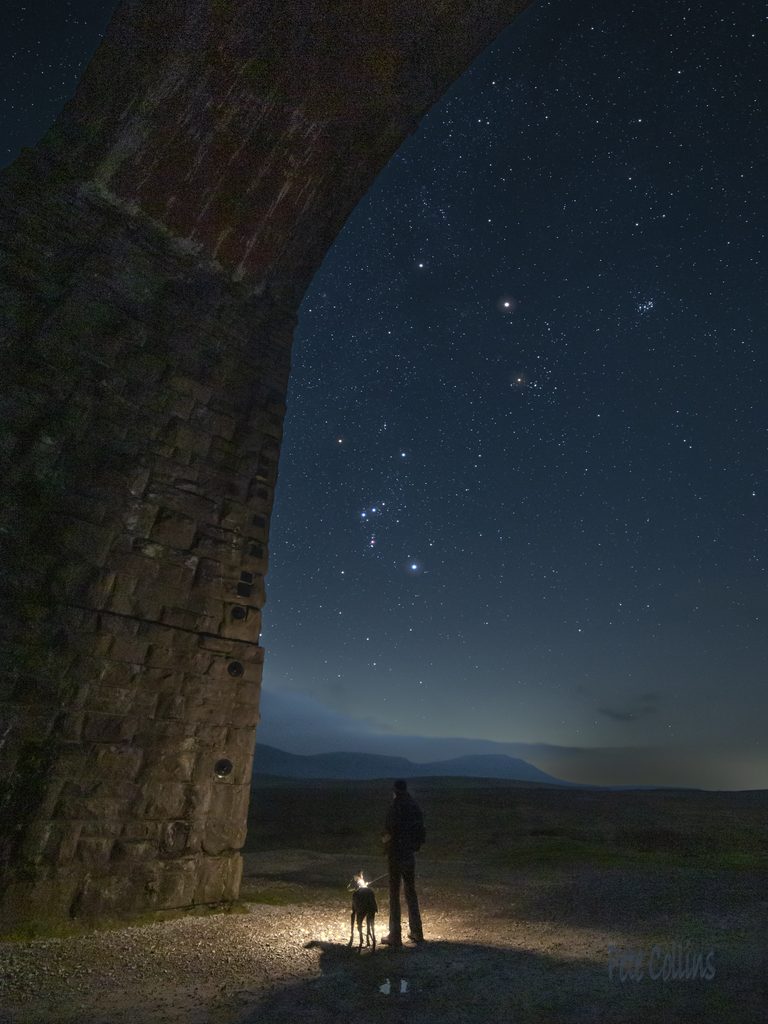
He showed me a photo of himself standing under the Ribblehead viaduct in North Yorkshire (above), with his dog Bella, staring up at Orion, Taurus and the Pleiades star cluster (the Seven Sisters to many). As he described this picture to me, he said that one of the most amazing things that he thought about when he was standing there was about time; specifically, how long it takes light to travel across the universe. He recalled that the Hyades star cluster in Taurus (right in the centre of his picture), is about 150 light years from Earth. He also knew that the Ribblehead viaduct (that he was standing underneath when he took this photograph), was built 150 years ago. So as he stood there in the dead of night, marvelling at the universe, he knew that the light he was seeing from the Hyades cluster at that moment in time, set off towards Earth as the builders were laying the bricks of the Ribblehead viaduct that he was standing underneath. This connection between the stars, and human experience, has a way of making us feel more connected to the world around us on a deeper level. I’ve studied Astronomy from textbooks, computer codes and lecture halls, but there’s absolutely nothing more profound than looking up at the stars and seeing our history.
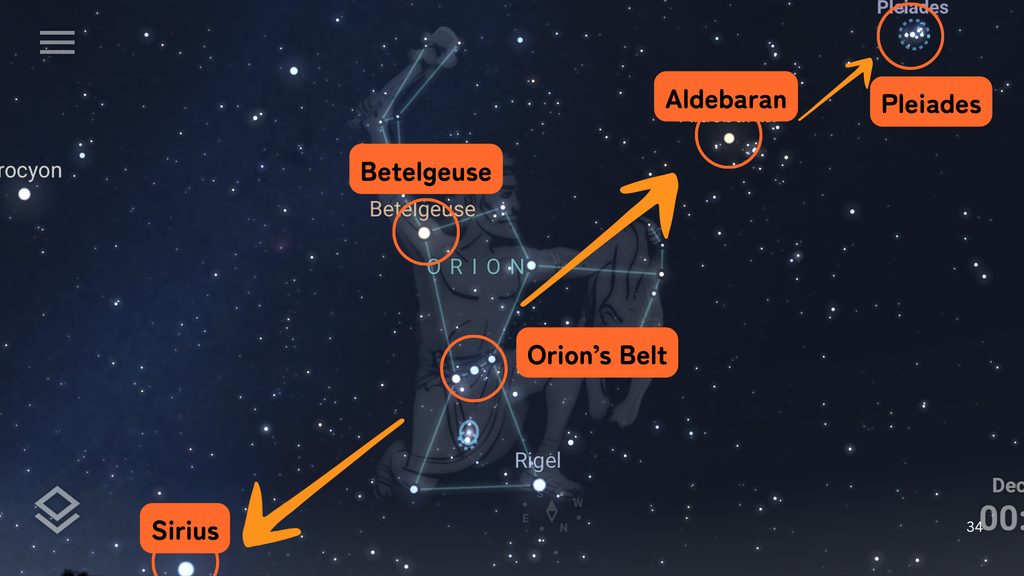
Once he’d told me this information about the Hyades, my curious brain started to look at the other things that are in the picture too to see what other connections that can be made. Let me tell you, this caused quite the google marathon session! The first thing I looked at was the famous Orion’s Belt. This is such a recognisable asterism for many of us. Those three distinct stars boxed in by four bright stars. I realised that the middle star, Alnilam, had sent the light that I was seeing now as the calendar went from BC to AD. And the two stars on its left and right, Alnitak and Mintaka, sent their light our way that we see now in the dark ages. Moving back towards the Hyades in the photo, we see Aldebaran where the light I was seeing from that beautiful orange dot in the sky started to come this way when the Valdivia earthquake happened, the largest earthquake ever recorded. Just up from Aldebaran, sits the Pleiades star cluster. It is about 440 light years away, meaning that it sent the light we are seeing now towards us when tobacco and potatoes were first introduced to the UK. Also in this image is Sirius, the brightest star in our night sky. It is often called the Disco star due to how the atmosphere makes it twinkle vigorously or the Dog star due to its constellation. Sirius is quite close to us and it sent the light we see now towards us when Donald Trump was first inaugurated as the President of the United States, and, very memorably when Brexit was triggered in the UK! Perhaps some people were having discos at this time in history, and perhaps some were feeling sick as a dog! Perhaps one of the most famous stars in the sky is also in this photo, it’s Betelgeuse. At approximately 640 years away, the light that we are seeing now from Betelgeuse would have set off at around the time where the Black Death was causing devastation here on Earth. And now because of all this, when I look at Betelgeuse I think of the Black Death, at my favourite star cluster the Pleiades I think potatoes and, most alarmingly, when I look at Sirius, my brain conjures an image of Donald Trump! I’m not sure if my view of the universe is better, but it sure is different!
But these are just some of the things I saw from that one picture, and already they gave me a deeper understanding of the universe that I am lucky enough to live in. So let’s go into this a little bit deeper. We know that light travels about 300,000,000 m/s, so let’s extend this out to objects that we are really familiar with.
Seeing objects in the past
Let’s start with the Moon. The image that our eyes see of the Moon when we look at it, is 1.3 seconds behind the reality of what the Moon would look like in that instant. This isn’t very long because the Moon is relatively close (astronomically), but if we go a little bit further out, it takes eight minutes for light to travel between the Sun and the Earth. Saturn is 10 times further away than the Earth is from the Sun so you can imagine it will take like 80 minutes to get to Saturn quite easily. We are now starting to see why sending signals to the outer Solar System on space missions is quite tricky. This is why there are a lot of autonomous spacecraft and instruments being built to do missions that are further away from us. We go even further out and we find Neptune, where it takes four hours for light from the Sun to the surface. So even with our Solar System, our local neighbourhood, we are starting to see that we are not seeing objects in real time, we are seeing them in their past.
One of the things that I find interesting when it comes to images of the Solar System, and indeed objects further away, is what has changed since the image was taken? If we think about the star Betelgeuse, dubbed as the star that is next to supernova close enough for us to see, given that Betelgeuse is 640 years away, there was always a possibility that 639 years ago Betelgeuse collapsed in a glorious supernova, and next year we will see the light from this in our skies. That is a very exciting prospect in the eyes of an astronomer, and only time will tell if this is the reality.
The Plough
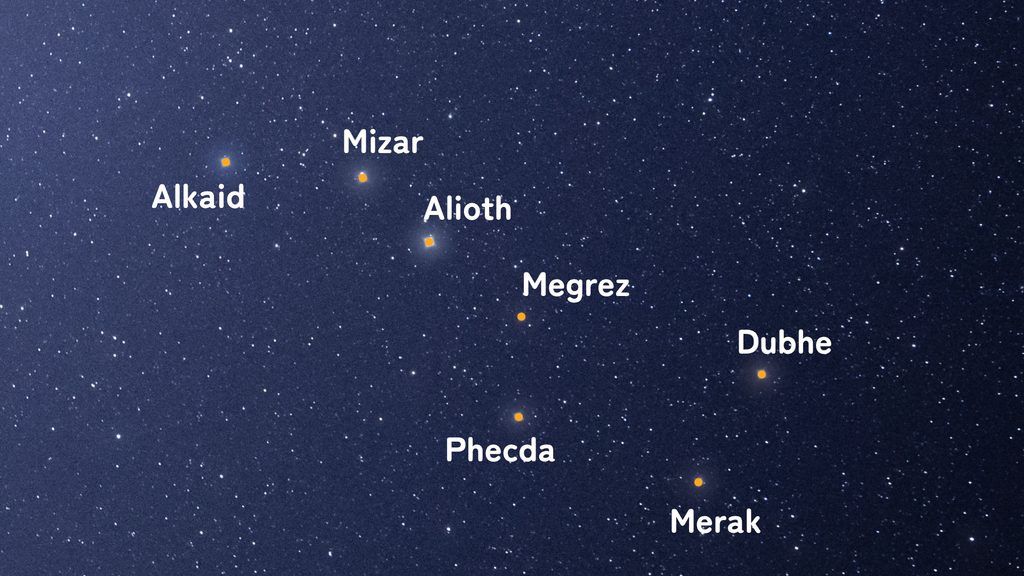
Let’s think about famous objects that we see in the night sky that we can make this kind of connection with. One of the most common asterisms that everybody on this Earth will probably have heard of, is the Plough. If you don’t know it by the Plough you may know it as the big dipper, the saucepan, the bottom of the bear, or some tiny humans may think its Maui’s fishhook. The Plough famously has seven stars (those with keen eyes can see that Mizar is a double), and those seven stars are relatively close to the Earth. The furthest away of these stars, Dubhe, is 123 light years away, meaning that the light would’ve set off from Dubhe in 1903. Interestingly, in 1903 Marie Curie won the Nobel prize, and was the first woman to do so. It was also the year of the first powered aeroplane flight. Alkaid is the star that is the tip of the handle, and light would’ve set off from that star in order for us to see it now, in 1922. In 1922, Tutankhamun’s tomb was found and the BBC was founded. Three of the stars and the Plough are about 83 light years away. That means the light set off from these stars in 1943, which was the year of the battle of Stalingrad and also the year when my favourite childhood toy, the slinky, was invented. Getting ever closer to Earth, Merak is 80 light years away. This means that the light set off that we are seeing now in 1946. This is when Winston Churchill gave his famous iron curtain speech and when the UN was formed. It was also the year of the premiere of the movie ‘It’s a Wonderful Life’. The closest of the seven stars is Megrez. The light would have set off in 1968 for us to see it now from this star. In 1968, there were famous assassinations of Robert F Kennedy and Martin Luther King Jr. In happier news, it was also a huge year for the space industry and humanity when Apollo 8 became the first crewed spacecraft to leave Earth’s orbit, circle the Moon and capture the absolutely iconic Earthrise photograph. This is just the seven stars of the Plough. Knowing these facts while looking at the stars at this specific moment in time, connecting them with events from history, allows us to feel a deeper connection with our universe. It also allows us to try and build a 3D picture of the world around us, rather than just seeing the constellations as a flat 2D mural rotating around our heads.
Beyond the Plough
As we zoom out from the Plough, we start to see other well-known stars, for instance the North Star, Polaris. Polaris is approximately 440 light years away which means the light we see now set off when Thomas Harriet introduced potatoes to us here in the UK, and Thomas Cavendish began circumnavigating the globe. If we go to the other side of the Plough, arcing down to Arcturus, we can find more connections. Arcturus is only about 40 years away, meaning that the light we see now set off in 1986. 1986 was a bumper year for things happening; including the devastating Challenger and Chernobyl disasters, however some good things did happen too. Voyager 2 passed Uranus and took a very well known photograph, and Halley’s comet made it its most recent closest approach. The summer triangle is another well-known feature in the night sky, linking Deneb, Vega and Altair. Deneb, the tail star of the Swan in the constellation of Cygnus, is a long, long way away and the light we see now set off when BC turned to AD, Vega and Altair are much closer. The light setting off from Vega that we see now set out in 2001, the year of the infamous 911 attacks, but also the year the first Apple iPod was released and the first space tourist was on the ISS. Altair is even closer than Vega, the light set off from there that we see now in about 2009. This year saw Barack Obama become the US president, the launch of bitcoin and also the famous miracle on the Hudson River.
Relating the Queen to Starbucks
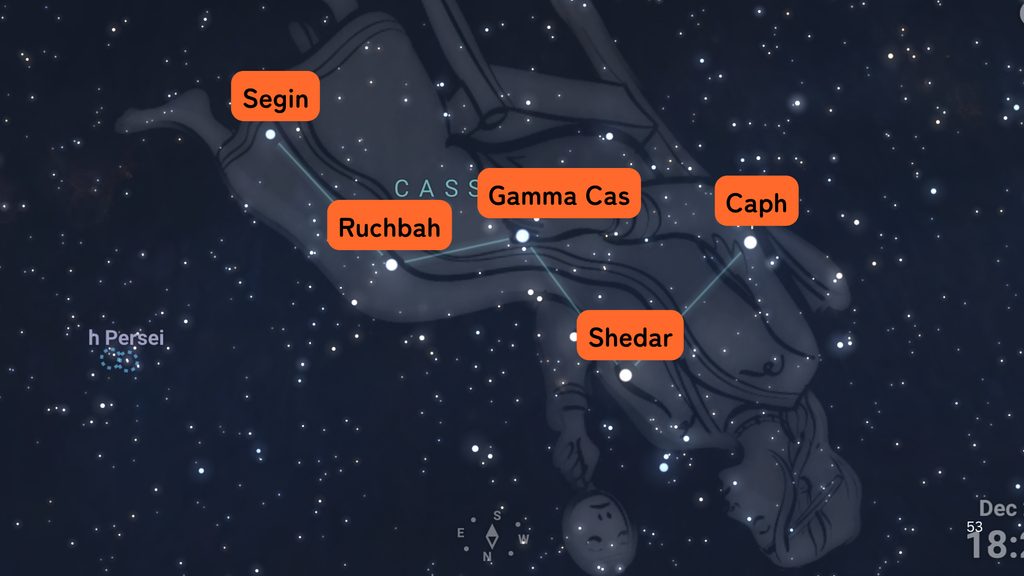
The last constellation I want to tell you about is Cassiopeia, that makes the famous ‘W’ in the night sky. The stars in Cassiopeia’s W range from being 55 lightyears away to 550 lightyears away, each with their own stories to tell. Gamma Cass is the furthest away of the five brightest stars, the light we see now from the star set off just after the printing press was invented. Segin is a little bit closer, again the light from here set off towards us when Thomas Harriet was bringing potatoes to us. This time seems to be very common, perhaps it is reflecting how important potatoes are to us as a society! Shedar is approximately 230 lightyears away so the lights set off towards us from the star when the first successful smallpox vaccine happened. Getting closer, Ruchbar sent the light we see now in 1926. This year was a brilliant year, it saw the first liquid fuelled rocket launched by Goddard, the first transatlantic telephone call, the first woman to swim English channel, and the incredibly notable birth of David Attenborough! The closest star in the W is Caph. This star sent the light we see now towards us in 1971; the year Apollo 14 landed on the Moon, the year Walt Disney World opened in Florida and, for those of you who adore coffee, the first Starbucks opened that year too.
To the edge of the universe
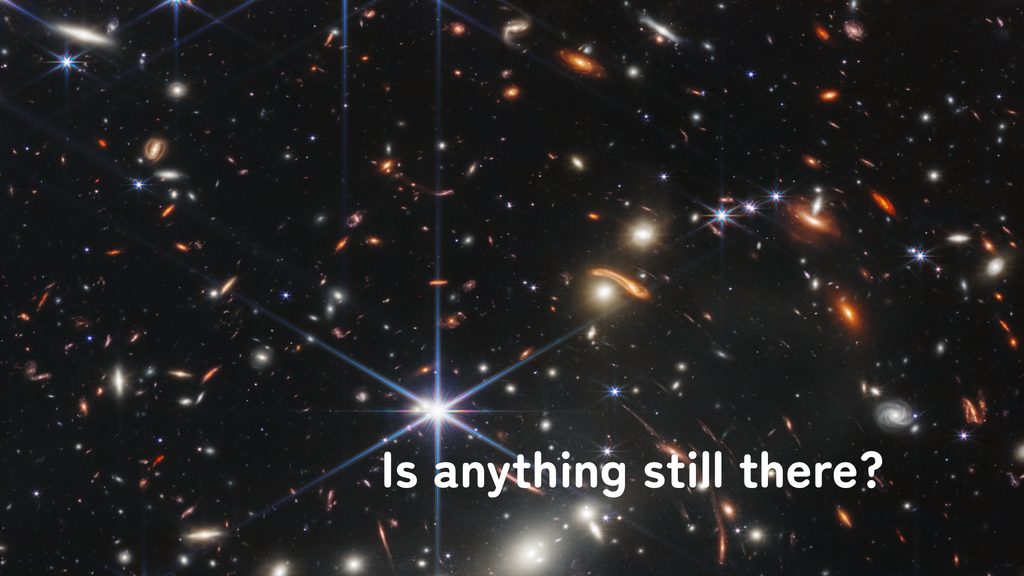
As we look through the universe, we see things like nebulae being closer to us. These objects are kilolightyears away. Objects that are kilolightyears away, often send that light towards us when we were in the dark ages, or ones that slightly further away when Sparta was at war with Persia, or slightly further away when Stonehenge was built, or even slightly further away when part of Mount Etna fell off and caused a tsunami. Further out in the universe, we see things like star clusters like the ones in Hercules and Pegasus. The light we see from these clusters now set off when woolly mammoths and woolly rhinos were roaming the Earth and when we were still in the grips of ice ages. Galaxies are further away still, these are megalightyears away. The light that we see from galaxies set off when the Earth was still slotting into the continent positions it shows today, when the Himalayas were still rising, when the Earth was cooling, when ice was accumulating at the poles, and when Megalodon were still prowling in the oceans. In the universe, there is even a galaxy far away enough that it takes 66 million lightyears to reach us. This means that the light we see from this galaxy today set off as the non-avian dinosaurs were meeting their fateful end. If we look at the James Webb Space Telescope deep field image, we can see every single point on the image is a galaxy (excluding a few obvious foreground stars)! This image marks the furthest we can see it back in time. We can only see as far away as light can travel in the age of the universe. The age of the universe is 13.8 billion years old. However, what we need to remember is objects don’t stop moving or evolving when they send us the light. The furthest object that we have seen, will have kept moving once it sent the light that we see now, and estimated put it at a distance of 33.8 billion years away.
What does this mean?
One of the most intriguing things to ponder is if we have received light from an object 1 billion years ago, what that object would look like now after 1 billion years of evolution? It would definitely not look the same. This gives rise to the unnerving question, is anything still there that we are seeing out in the universe today? We are seeing the world further into the past the further we look, and seeing images ever further from reality.
But is that really such a bad thing?
This blog was written by Dr Sarah Crick for Mission Astro.