
Hunting for Earth-like exoplanets
Reading Time: mins
Summary
Exoplanets have been discovered for over 30 years. The first exoplanet was detected orbiting a Sun-like star, 51 Pegasi b, found in October 1995. In the three decades since then, astronomers have confirmed over 6,000 more exoplanets in our galaxy. But this is just the tip of the iceberg. Incredibly, we now know there are more planets than stars in our Milky Way. Nowadays, we can also learn so much about these exoplanets, their size and mass, even what the exoplanet or their atmosphere is made of, to help us hunt for Earth-like planets.
What is an exoplanet?
An exoplanet or extra solar planet is a planet beyond our Solar System.
Where are exoplanets?
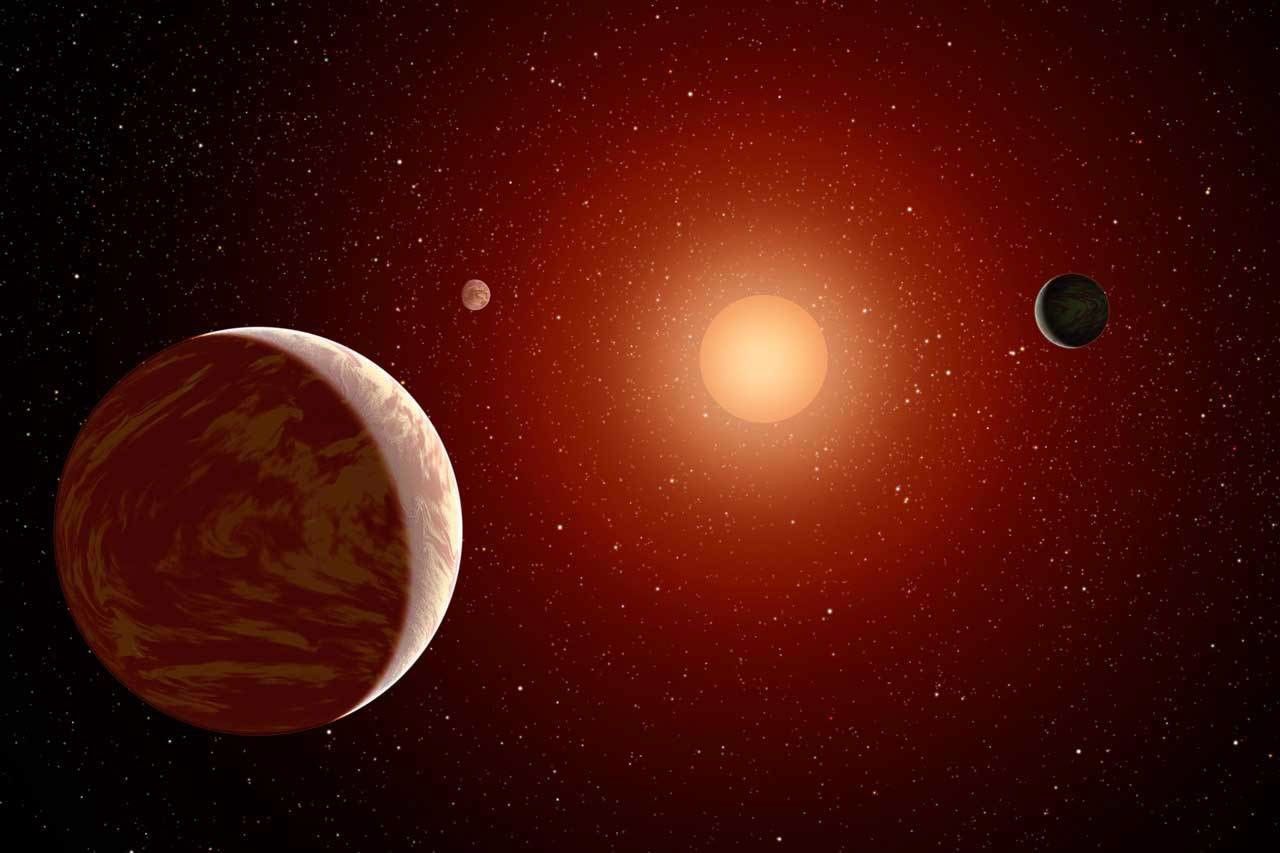
Most exoplanets orbit other stars. However, some have been found to be free-floating, not bound by any star, these are called rogue planets.
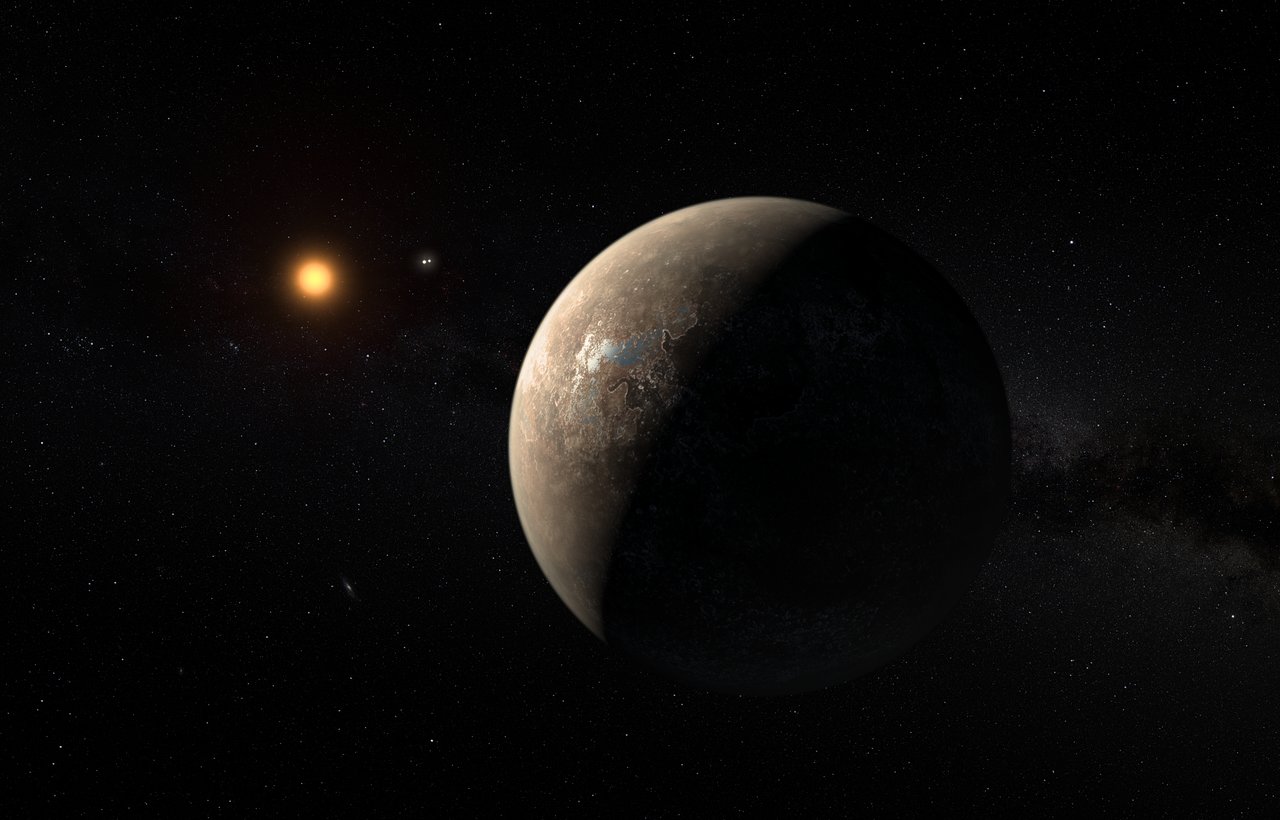
Most exoplanets have been discovered in a relatively small region of our Milky Way galaxy. Within thousands of light-years of our Solar System (one light-year = 9.46 trillion kilometres). This is limited by how far and faint current telescopes can observe. The closest exoplanet we have discovered to Earth, Proxima Centauri b, is still about 4 light-years away.
How many have we found?
So far astronomers have discovered 6451 exoplanets, out of the billions that they believe exist.
What are expolanets like?
There is a huge range of exoplanets discovered so far. Scientists often refer to them as a zoo of exoplanets and try to compare them to planets in our own Solar System.
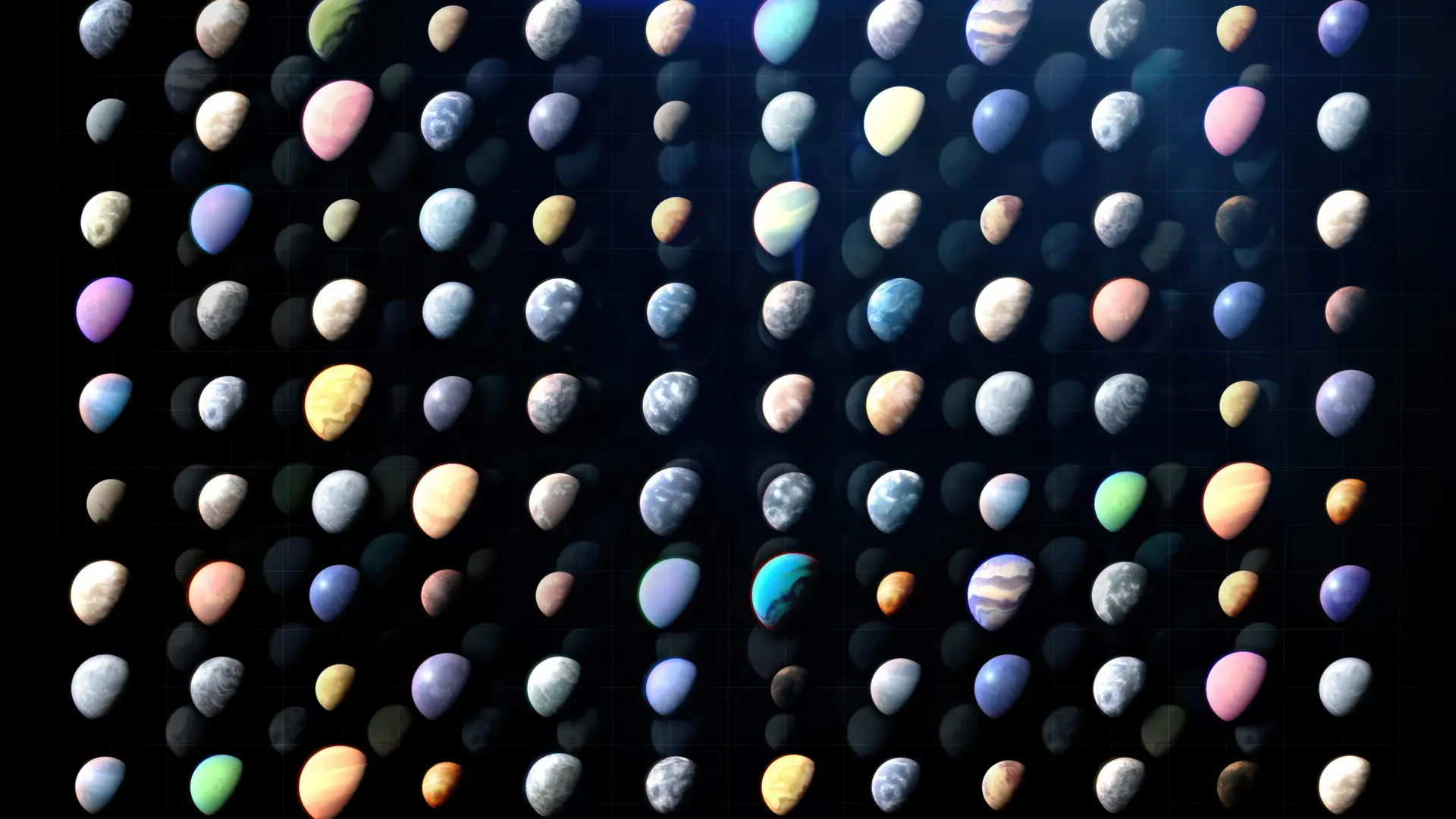
There are massive exoplanets, like Jupiter, but orbit really closer to their host star, closer than Mercury is to our Sun, known as hot Jupiters. Other exoplanets are rocky or icy, super-Earths or mini-Neptunes. This means that the exoplanets are bigger (super) or smaller (mini) then those similar planets in our solar system. Whereas some exoplanets are completely different from any in our Solar System. Some systems have multiple planets, and some planets are even orbiting two stars.
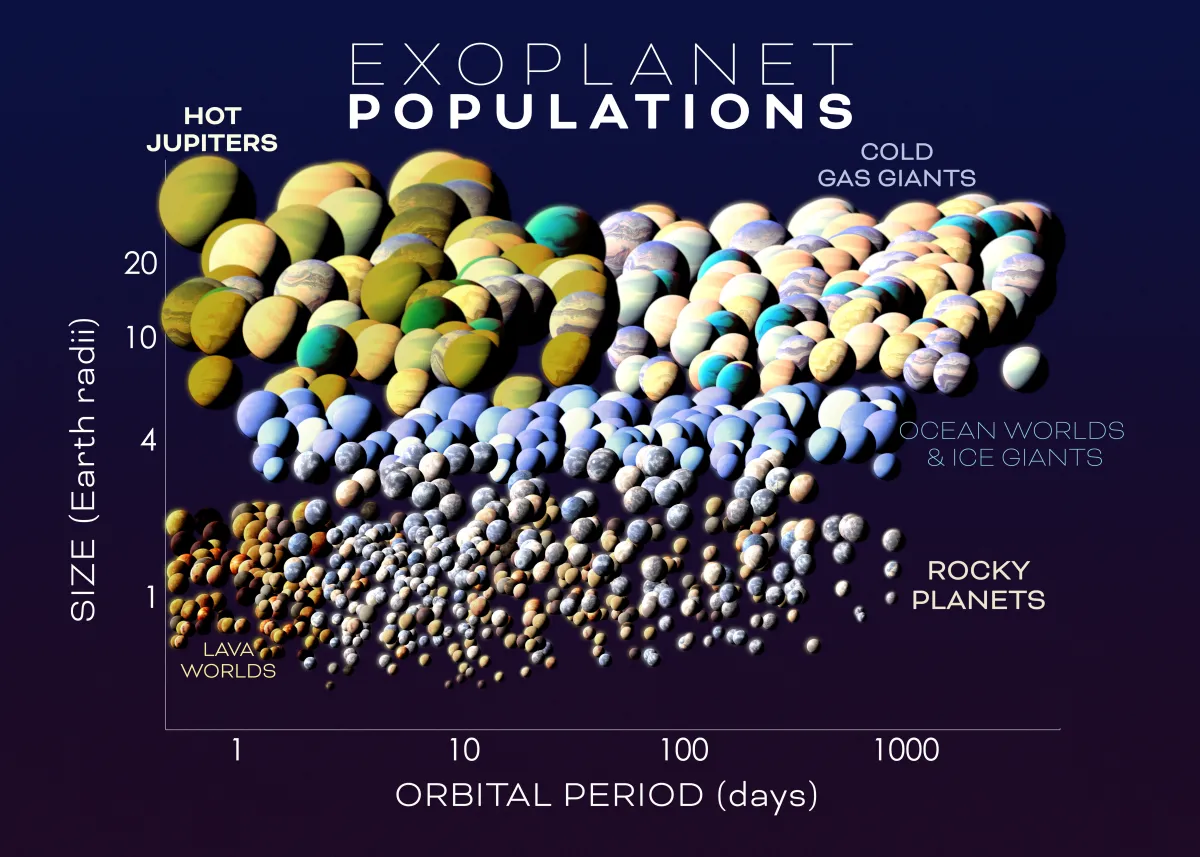
Credit: NASA’s Goddard Space Flight Center
What is an Earth-like planet?
Of particular interest to scientists are Earth-like planets. These are defined as planets with rocky surfaces and about 0.5 to 1.5 times the size of Earth. These exoplanets also need to be orbiting their parent star in a region known as the “habitable zone”. This is the region where there is the potential for liquid water to exist on rocky planets, considered essential for life as we know it to exist. This region is nicknamed the “Goldilocks Zone” as its not too hot, and not too cold!
Scientists measure exoplanets’ sizes (diameters) and masses. This enables them to work out their compositions, ranging from rocky (like our Earth and Venus) to gas-rich (similar Jupiter and Saturn). We are also discovering that some exoplanets may be dominated by water or ice, whereas others exoplanets are dominated by iron or carbon. Some lava world exoplanets have been discovered which are covered in molten seas, as well as puffy exoplanets the density of Styrofoam and dense cores of exoplanets still orbiting their stars.
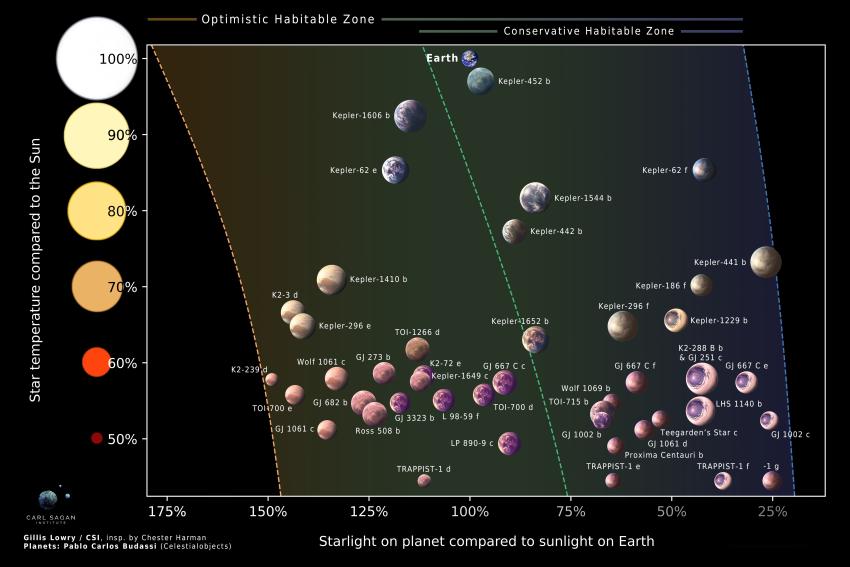
Credit: Gillis Lowry / Pablo Carlos Budassi. Licence type: Attribution (CC BY 4.0)
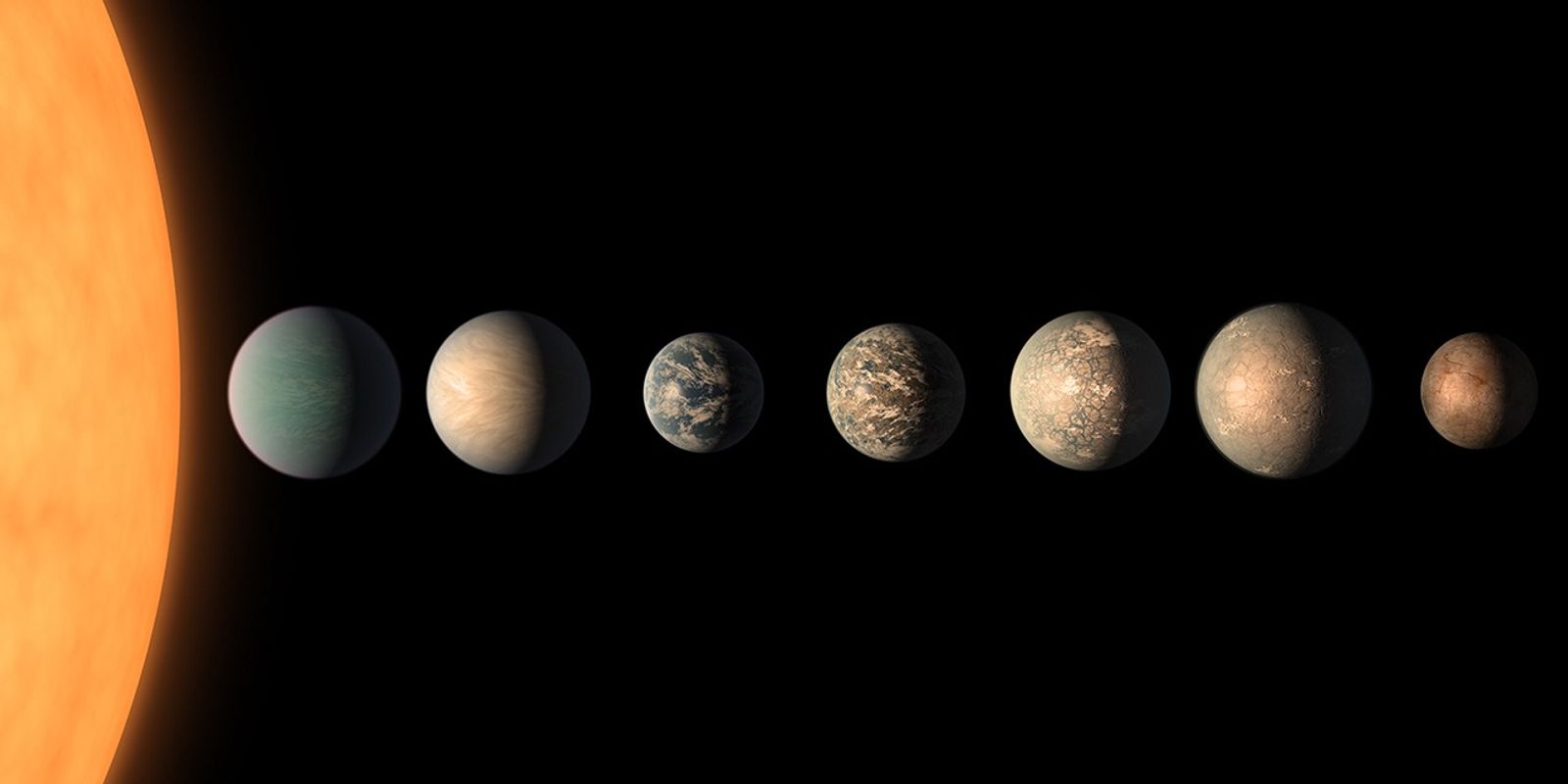
One of the most exciting discoveries in the search for Earth like planets is the TRAPPIST-1 planetary system. This star system is about 40 light years away and amazingly has seven rocky worlds, all of which are in the habitable zone and thus have the potential for water on their surfaces.
Why study exoplanets?
“Are we alone?” is one of the most profound questions we can ask as humans. The first exoplanet was discovered in 1995. This was one of the exciting discoveries in Astronomy which first got me hooked and wanting to spend my life studying space. Nowadays studying exoplanets is one of the fastest growing areas in Astronomy.
Investigating the diverse range of exoplanets, from the small to the large, and from Earth-like to the weird and wacky, allows us to understand how those systems formed and evolved, as well as providing essential clues as to whether and where life might exist in other places in the Universe. They can also help us understand how our own Earth and Solar System formed and evolved.
How do we discover exoplanets?
There are two main techniques for discovering exoplanets: the transit and radial velocity methods. There are other methods such as direct imaging, microlensing and astrometry to discover exoplanets as well, but they are less common.
Transit method:
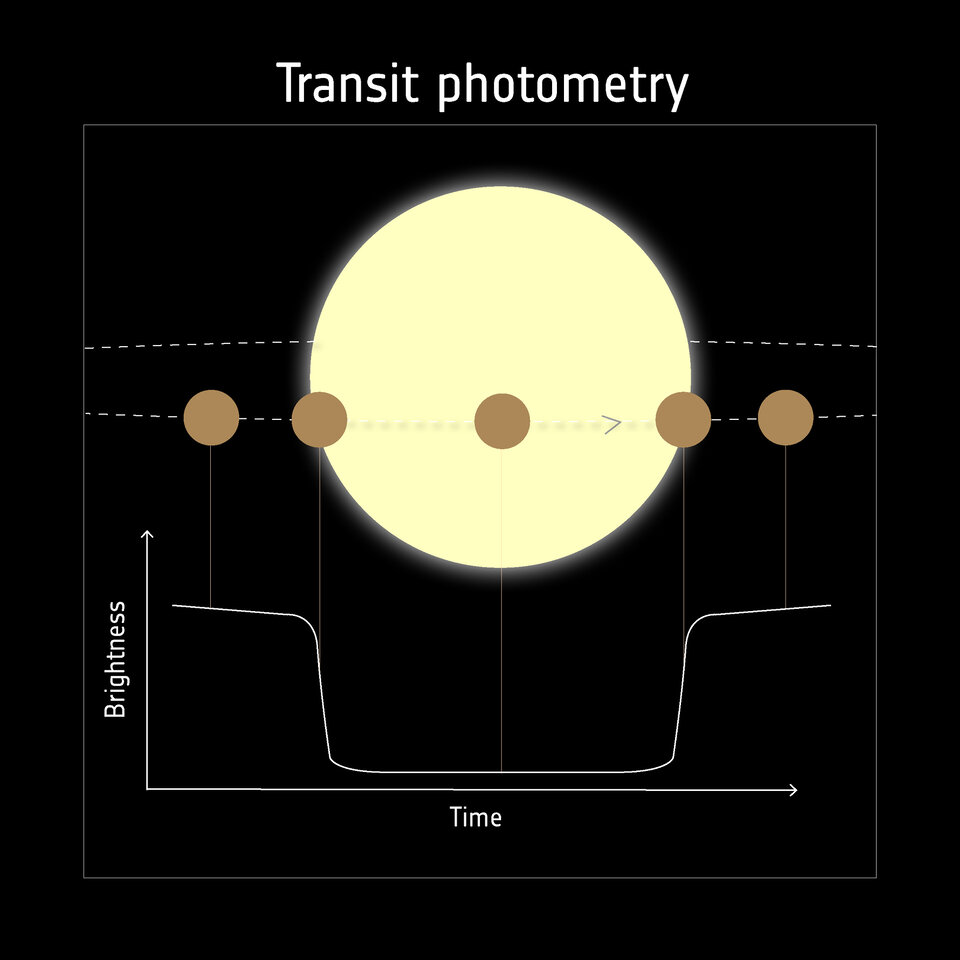
When a planet passes directly between us and the star it orbits, it blocks a tiny bit of that starlight. This means for a short while that star’s light actually gets a little dimmer. This tiny change is enough for astronomers to infer the presence of an exoplanet around a distant star. This is similar to an a transit of Venus across our Sun which we can observe from Earth. However, it is much harder to see as the stars and their orbiting planets are light years away.
Radial velocity method:
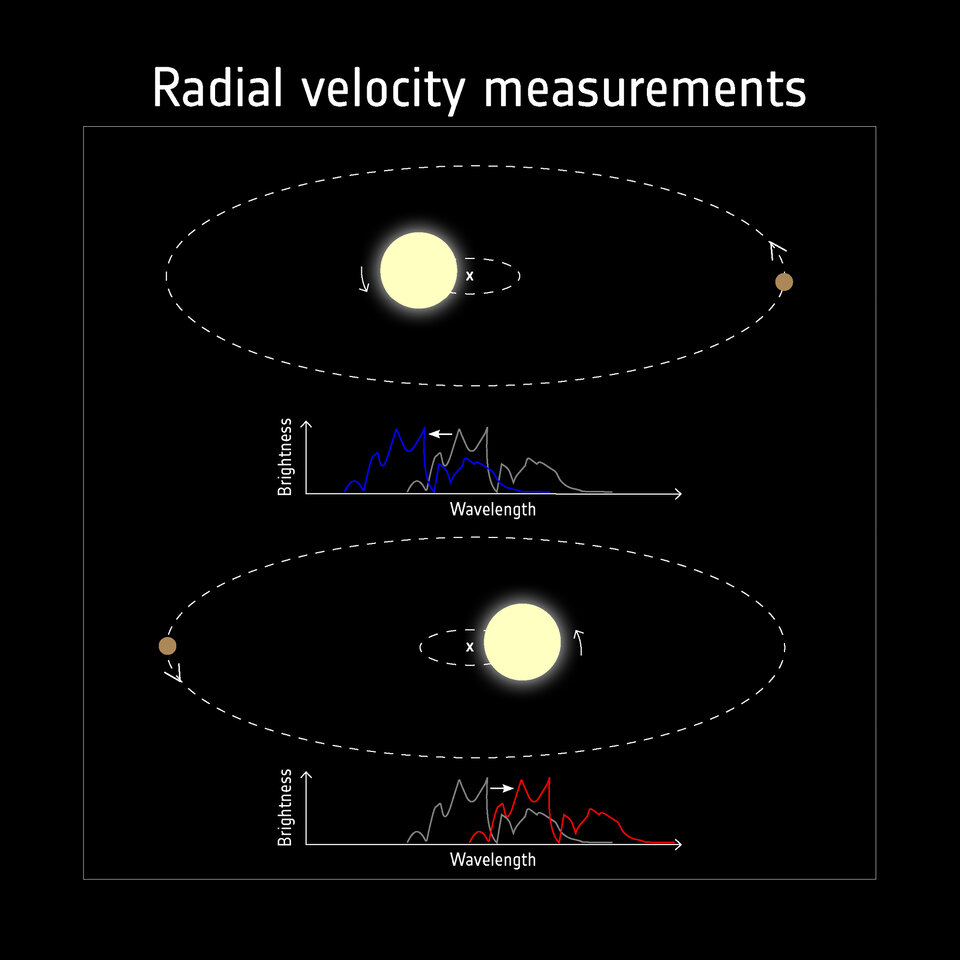
As exoplanets orbit their host stars, their gravitational pull causes the star to wobble.
When astronomers observe the light spectrum of these stars they see a change. If the star is being pulled towards our line of sight by the planet, the stellar spectrum is shifted toward blue. Whereas when the star is pulled away from us the stars spectrum is shifted towards the red. This spectral shift tells astronomers there is a planet orbiting this distant star.
Exoplanet Space Telescopes
Exoplanets are so faint, tiny and far away that space telescopes are needed to discover them.
NASA’s Kepler Space Telescope
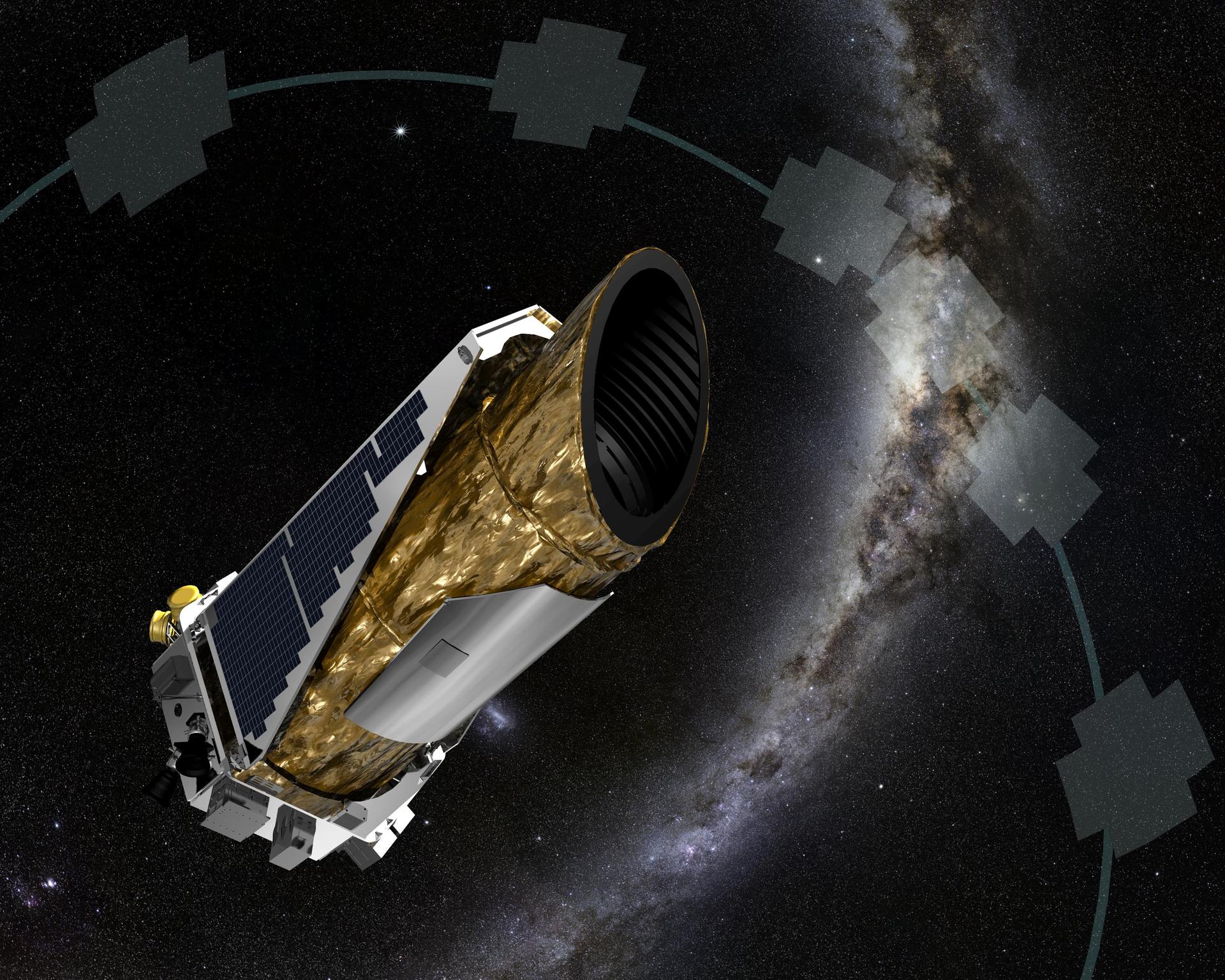
The first of these major space missions to discover exoplanets was NASA’s Kepler Space Telescope launched on March 7, 2009. This planet-hunting space mission was specifically designed to survey our region of the Milky Way galaxy to discover hundreds of Earth-size and smaller planets. It was searching for exoplanets in or near the habitable zone and trying to determine the fraction of stars that might have such planets around them. Kepler showed that our galaxy contains billions of hidden “exoplanets,” many of which could be promising places for life. Kepler proved that our night sky is filled with more planets than stars! This discovery revolutionized our understanding of our place in the Galaxy.
NASA’s Spitzer Space Telescope
The next major space mission was NASA’s Spitzer Space Telescope (2013-2020), which was not designed to search for exoplanets. However, its infrared instruments made it an excellent exoplanet explorer. Spitzer discovered the extraordinary TRAPPIST-1 system, which contains an unprecedented seven planets all found in the star’s habitable zone.
Transiting Exoplanet Survey Satellite
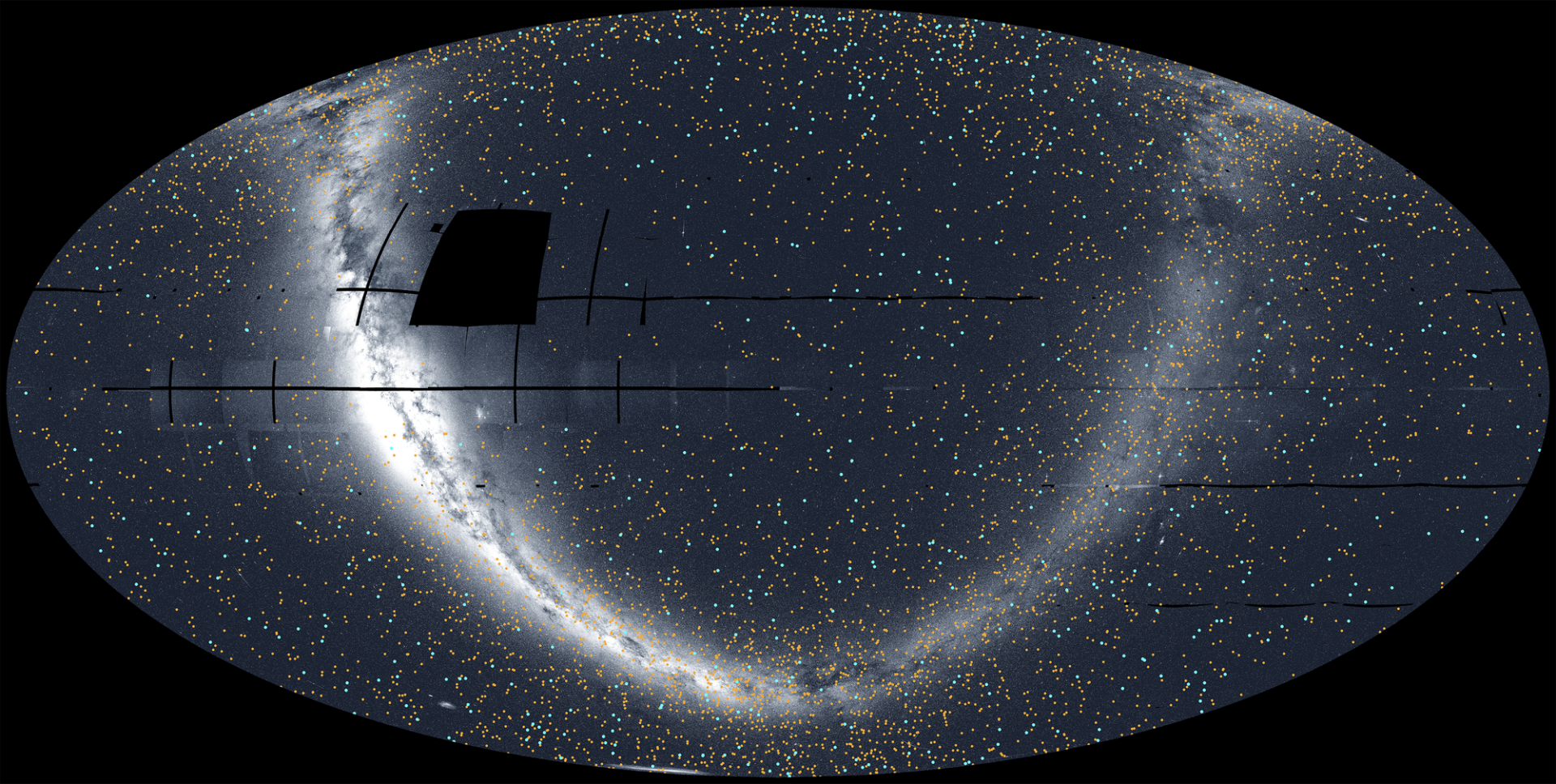
Transiting Exoplanet Survey Satellite (TESS) launched in April 2018, as a successor to Kepler to discover exoplanets. The mission focused on discovering exoplanets in orbit around the brightest dwarf stars, which are the most common types of stars in our galaxy. TESS has discovered 700 new exoplanets, as well as more than 5,000 candidates that astronomers are working to confirm.
NASA’s James Webb Space Telescope
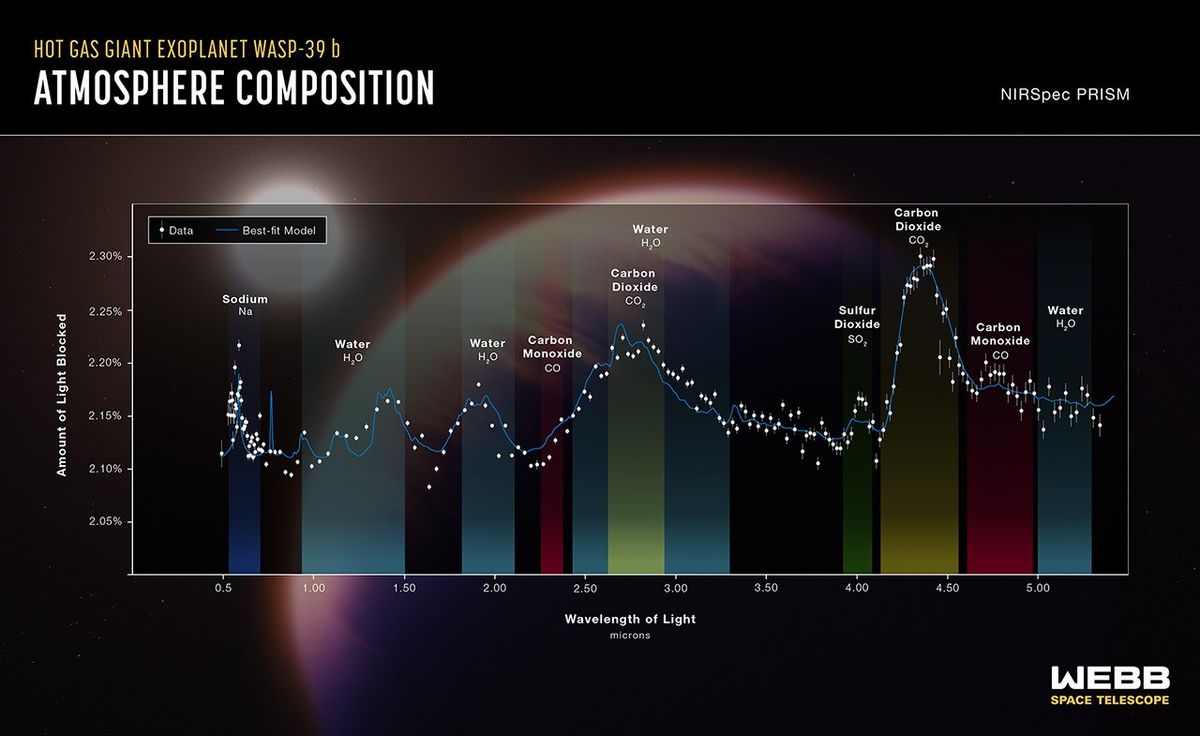
NASA’s James Webb Space Telescope (launched December 25, 2021) is enabling us to learn far more about the exoplanets. Through spectroscopy, and thermal imaging astronomers are learning more about planets’ atmospheres and the conditions on these exoplanets. Some exoplanet highlights from JWST:
- WASP-96 b: Is a gas giant exoplanet. The first exoplanet transmission spectrum (spectrum collected when the exoplanet is transiting its host star) collected by JWST showed clear signs of water vapour. It is the first transmission spectrum that includes wavelengths longer than 1.6 microns with high resolution and accuracy, and the first to cover the entire wavelength range from 0.6 microns (visible red light) to 2.8 microns (near-infrared) in a single shot.
- TRAPPIST-1 b: JWST took the first thermal emission observation on an exoplanet as small as Earth and as cool as the rocky planets in our Solar System. These observations suggest that the planet lacks a significant atmosphere.
- WASP-39 b: For the first time JWST discovered carbon dioxide and sulfur dioxide in the atmosphere of a gas giant exoplanet. The detection of sulfur dioxide provides evidence of photochemistry – these are chemical reactions caused by energetic stellar light.
Nancy Grace Roman Space Telescope
The future Nancy Grace Roman Space Telescope will enable extending the growing knowledge about exoplanets. It is predicted to discover 100,000s of exoplanets, a huge leap from the 6500 planets we have discovered so far.
Summary
Over 30 years ago the first exoplanet was discovered. Since then, astronomers have confirmed over 6,000 more exoplanets in our galaxy. However, we now predict there are far more planets than stars in our Milky Way Galaxy. We are finding many Earth-like planets, and plenty of them are located in the habitable zone around their stars. Current and future space based missions are allowing astronomers to learn so much more about these extrasolar planets than ever before.
This post was written by Dr Heather Campbell for Mission Astro.
If you have any questions about this post or our services, please contact us on missionastro.org.
References
- https://science.nasa.gov/exoplanets/
- https://ras.ac.uk/news-and-press/research-highlights/best-places-look-alien-life-scientists-identify-45-earth-worlds
- https://www.esa.int/Science_Exploration/Space_Science/Exoplanets/What_are_exoplanets
- https://www.nasa.gov/missions/roman-space-telescope/nasas-roman-mission-preps-to-unveil-new-populations-of-faraway-worlds/
- https://www.space.com/35069-what-is-an-earthlike-planet.html
- https://www.ras.ac.uk/news-and-press/research-highlights/best-places-look-alien-life-scientists-identify-45-earth-worlds
- https://www.eso.org/public/images/eso1629e
- https://astrobiology.nasa.gov/news/red-dwarf-stars-and-the-planets-around-them-2/
- https://science.nasa.gov/exoplanets/trappist1/
- https://science.nasa.gov/mission/tess/
- https://science.nasa.gov/exoplanets/trappist1/