
Are Aliens Closer than You think?
Reading Time: mins
“Are we alone?” is one of the most asked questions in humanity. It is represented frequently in film and literature; some representations are a lot more realistic than others. However its presented, the presence (or absence) of aliens is one of the biggest questions of all time.
A lot of people look other stars and the planets around them to search for life beyond the Earth. But what if we were to find life closer to home? Scientist believe there were three things that we need for life to emerge: liquid water, and energy source, and the chemical building blocks to build life with. Looking for places in the solar system where those conditions are met is the first part of this puzzle.
Life on the Moon?
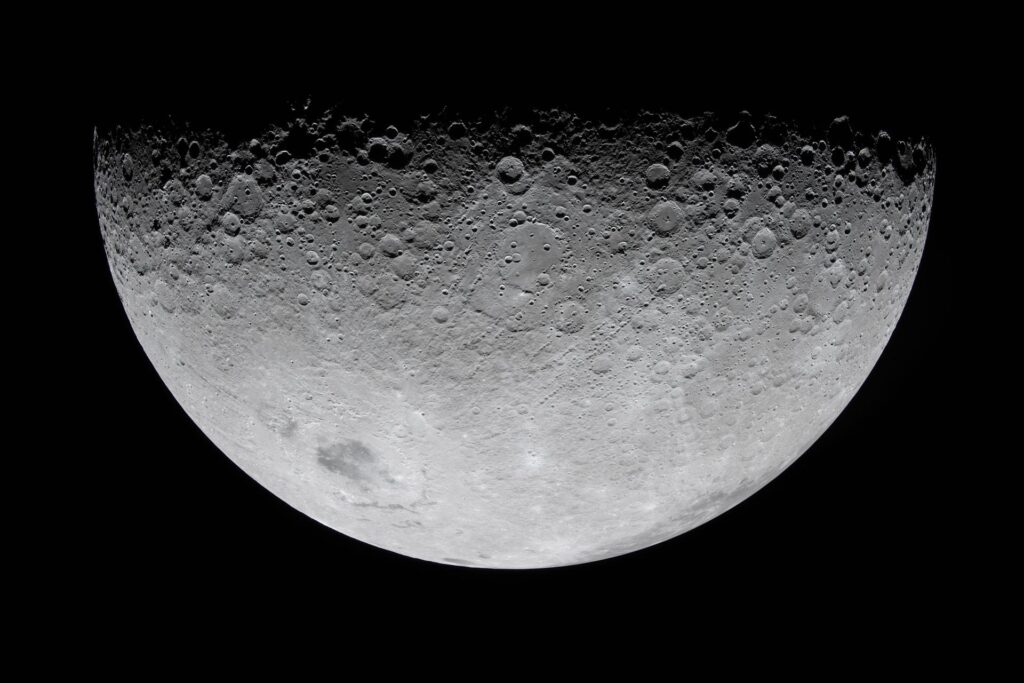
Before we look at more distant places in the Solar System, let’s stop first at the Moon and Mars. Lunar exploration has dominated the conversation in recent months due to the amazing success of the NASA Artemis II mission that sent 4 astronauts in a historic mission around the Moon. Our Moon is the body in the Solar System which we have managed to investigate the most as a human race. Starting with the Apollo missions, we began to understand only large natural satellite a bit better, and the discoveries keep coming. From Apollo, we leant some interesting things. We learnt that the Moon has an internal structure, that it is genetically identical to the Earth in terms of rock, therefore we learnt more about its formation than we knew before. We learnt that the crust is thicker on the far side of the Moon than the near side, we learnt that the oldest Moon rocks are older than the oldest Earth rocks, and, we got more skilled at driving rovers! In terms of life, we learnt from extensive sampling, that there were no signs of life on the Moon. This is still true now after a lot of remote sensing work carried out with orbiting satellites since. So sadly, the Moon is not a great place to look for life and the conditions for life are not met there.
Life on Mars?
Mars is publicised wildly as a place to conquer next after conquering exploration of the Moon. Despite how the Martian space race is played out in the media, there is some great science reasons to go to Mars. One is to learn more about life. The weird thing about Mars is that in the early stages of Mars’ and Earth’s evolution, there were times when they were very similar. They are both in the habitable zone of the Sun. The habitable zone is a range of orbits where liquid water can exist on the surface of a body. It is in the habitable zone where life is thought to emerge. So why is there life on Earth and not Mars?
Mars is barren and lifeless now however that doesn’t stop it being useful to us in terms of learning more about life. Finding signatures of past life is also incredibly useful. The Mars rovers are continually collecting examples of rocks on Mars that they see as having potential bio signatures for life. One of the struggles with this is that it’s difficult to decipher biological and chemical processes from geological processes, which is why this mission is a sample return mission. Any interesting samples on Mars have to be collected and then brought back to Earth to analyse in our Earth labs to see if these identified rocks are actually signs of previous life on Mars.
The surface of Mars in the past was thought to host hot springs which are really great places for life to emerge. There’s an energy source from the hot spring itself, water, and lots of minerals present. Hot springs on Earth can be studied, and are being studied by scientists to try and work out how microbes are fossilised in Earth hot Springs to inform what we should look out for on Mars. On Earth, fossil microbes are created as they flow out of hot Springs. The dissolved minerals cool off and entomb microbes. This is how it works on Earth, so signatures of this process can be looked for on Mars. Home plate in the Gusev Crater is a prime location to look for life on Mars as exhibits plenty of silicon deposits like those found in hot springs on Earth.
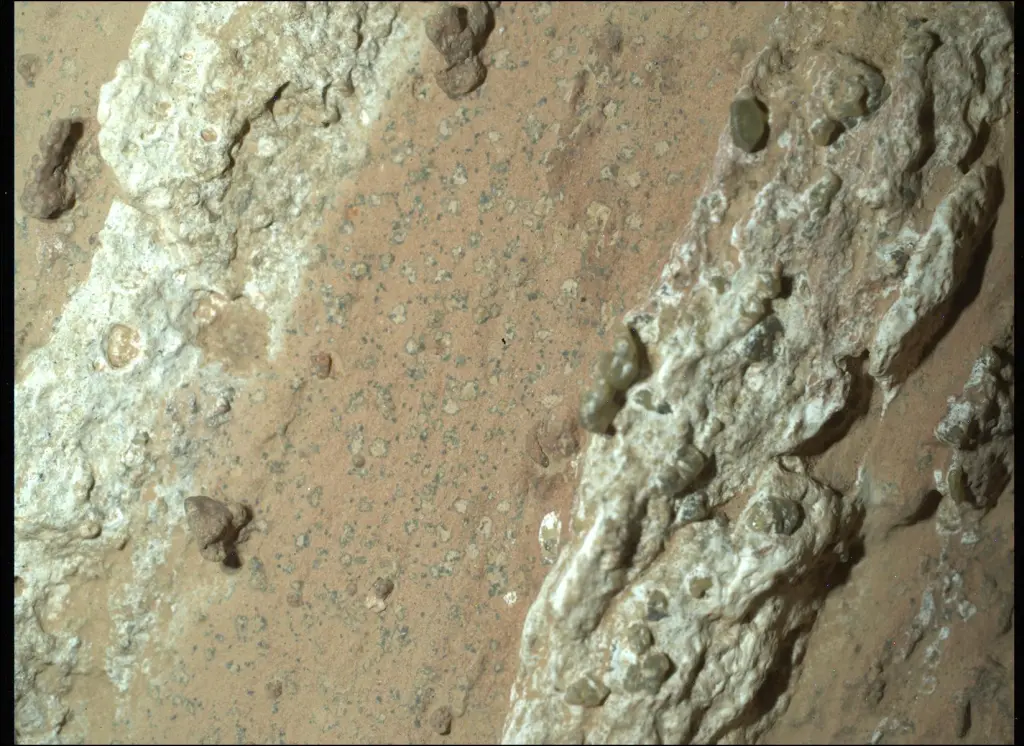
Mars is still an active area of research in terms of life. It might be life that was there and has petered out, but it is still a place that is interesting in terms of life in the Solar System. The Perseverance Rover found a rock that displayed some interesting ‘leopard spot’ patterns in 2024. This rock is interesting in terms of chemical signatures and structures that could have been formed by life billions of years ago once the samples are collected from Mars, we will definitely know more once the samples are collected.
The Moons of the Giants
Moving further from the Sun, the moons of the gas giants are a wonderful place to search for life. The gravitational pull of the gas giants causes many of its moons to experience heating in their interiors. This creates, in a lot of cases, quite an active environment within the structure of these moons. In some cases like Galilean moon Io, this tidal heating effect has turned it into the moon that has the highest number of active volcanoes that we know. On other moons, it can create active ocean moons. These moons have global oceans underneath their icy crusts. In many cases, we have reason to believe that these oceans possess the three things that we need for life. There’s water, the energy source is heat from the cores of these moons, and in some cases we have evidence that there are the chemical building box present in these oceans for life. Exciting right?!
Why are Ocean Moons so exciting?
The ocean moons are extremely exciting because if life would emerge on one of the ocean moons of the outer Solar System, this is officially a place that we are NOT expecting life to classically form. When we look at planets around other stars, we identify the habitable zone as a place where life could exist. If we find life not in the habitable zone of our Sun, this opens up a myriad of possibilities across other star systems in our Galaxy and beyond. In other words, there would be a lot more planets where life could exist, if we found it not in the habitable zone of the Sun. It would reshape our search for life off Earth dramatically.
How do scientist detect an under cross ocean?
Scientists can detect under-crust oceans in a few ways. They can look for changes in the magnetic field of the planet that the moon is orbiting. A lot of of the oceans underneath the crusts of these moons are composed of saltwater. Saltwater is electrically conductive. t=This is because the salt in the water has separated into ions. Ions are charged particles so as the moon orbits in the planets magnetic field, it can induce another magnetic field within the moon‘s liquid layer. This is has an effect on the planets magnetic field that can be measured. This a tell-tale sign that there is an ocean underneath the crust. Another way to check for an under-crust ocean is to see how much the moon is being stretched and squeezed by its parent planet. This effect is a gravitational effect called the tidal effect. The most common example of this that we understand well, is Earth’s tides. By measuring how much a moon’s surface deforms due to the gravity of the planet that it is orbiting is a way scientist can determine if the crust is floating on a solid or a liquid, hence, if it has an ocean. Yet another sign that there is an ocean underneath the crust of a body is if there are plumes of material erupting from the surface.
Hydrothermal Vent Life
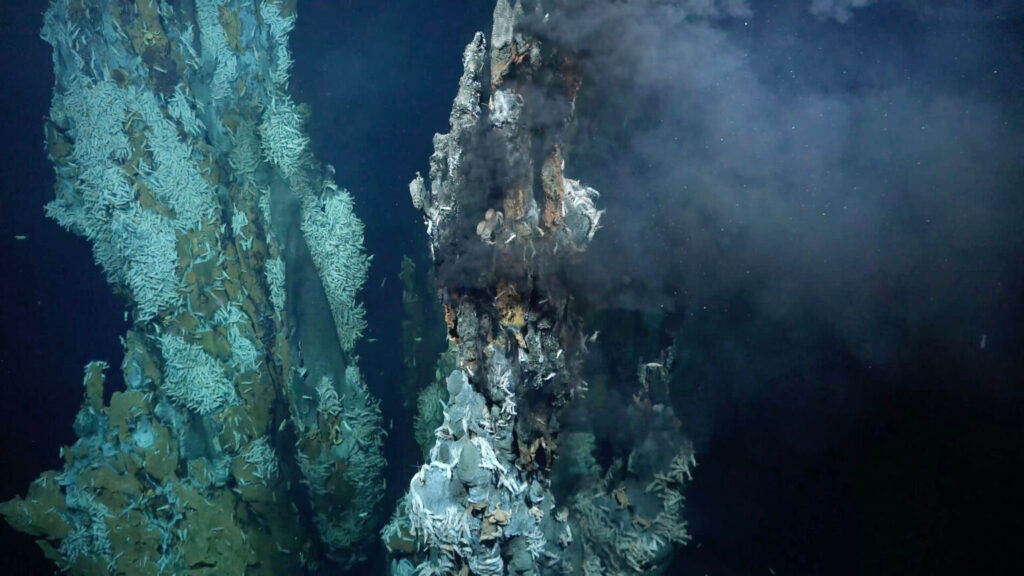
If if it is true that there are oceans under the crust of these moons in the outer Solar System, with hydrothermal vents on their sea floors and the chemistry needed to make life, what could that look like? Perhaps this question could be studied closer to home, in our own oceans. One of the leading theories for how life emerged on Earth is that it emerged near hydrothermal vents in our ocean, like the ones in the middle of the Atlantic ocean. Hydrothermal vents are a brilliant place for life to emerge. They are themselves a heat source and with a dense supply of chemical nutrients and minerals. Deep down in the oceans, there is no light. The process of chemosynthesis is used to release energy rather than photosynthesis. This allows life to thrive in this environment. The vents emit fluids that are packed with hydrogen, sulphur and methane, which are important for chemosynthesis. They are also rich in catalysts like iron and nickel which facilitate chemical interactions. There’s a honeycomb structure of the vents which create microenvironments for molecules to react. The vents are also safely at the bottom of the oceans, more protected from surface threats like different climate changes and asteroid impacts.
Extreme Life
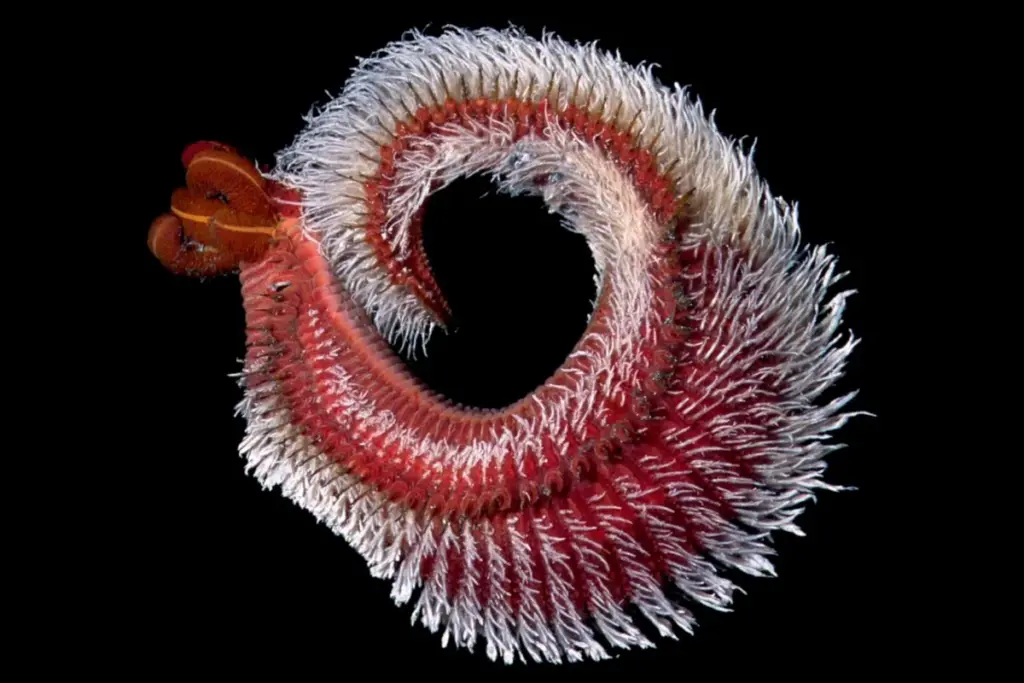
When considering life in other places in the Solar System, we have to look at the extremes of life here on Earth and how some Earth animals have adapted to extreme conditions. In the study of extreme life, tardigrades are one of the most adapted microscopic forms of life we have here on Earth. Tardigrades are microscopic water bears. They can live in deep oceans, rainforest, deserts, Antarctica, they are even found in parks. They can survive freezing, boiling, high radiation and lack of oxygen. They’re the only animal to survive in space exposed to all the radiation and to survive a vacuum. Thinking more specifically about in deep sea life, Pompeii worms are found to live around hydrothermal vents. They are the most thermally tolerant species known. When fluid comes out of hydrothermal vents is approximately 400° C. This cools quickly as it spreads out into the ocean. Pompeii worms can tolerate temperatures are about 120° C where as most animals struggle to cope with about 40° C. This means that they can cope with the temperatures near hydrothermal vents. Pompeii worms also have a hairy fleece like layer of bacteria that protects them. Deep sea angler fish are found in all oceans of Earth. The females have adapted to be able to catch prey by having a bright glowing lure which is a thin that has adapted for this purpose. They have also got larger bodies which means they can eat larger prey. The male deep sea angler fish have adapted in a different way. They have adapted to have huge nostrils so they can sniff out female mates. Studying creatures on Earth that have adapted to their extreme conditions, will help us theorise what creatures could survive in the environments in the ocean moons of the outer Solar System.
Enceladus
Let’s take a case study of one of these ocean moons; let’s look Enceladus.
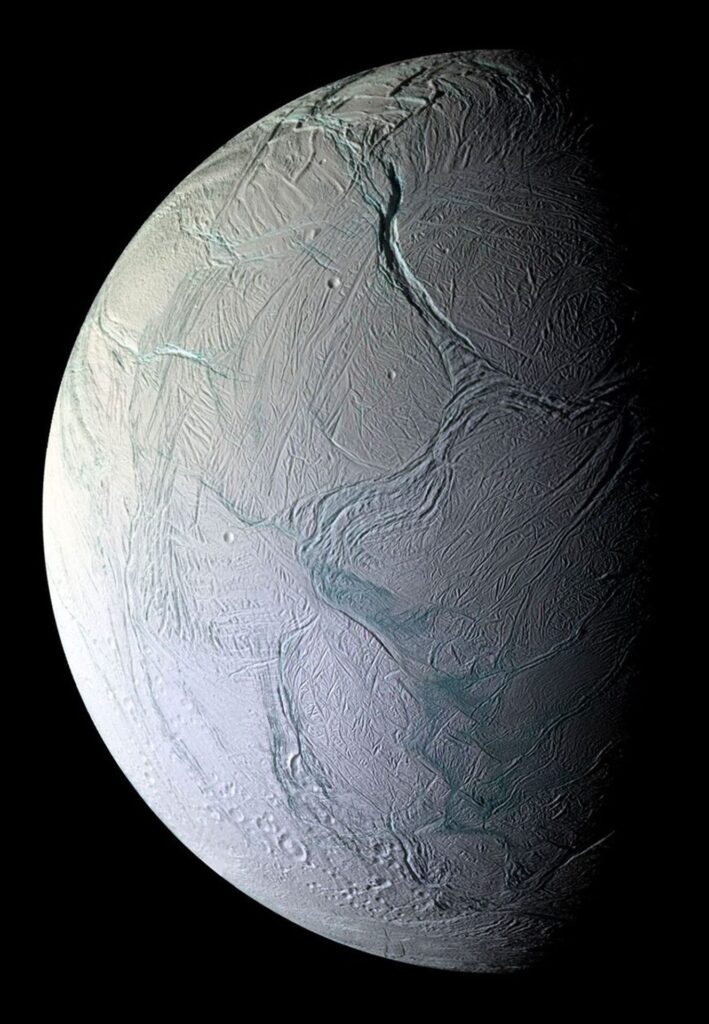
Enceladus is a moon of Saturn. It has a icy crust that is littered with impact craters, some of which are as large as 22 miles in diameter. The whole moon itself is 500 km wide, has a average surface temperature of -200° C and it orbits Saturn every 33 hours. It is the closer to Saturn than our Moon is to the Earth. It is tidally locked to Saturn which means that it always shows Saturn the same face. It is the most reflective body in the Solar System reflecting almost 100% of the light it receives from the Sun. As Saturn is much further from the Sun than Earth is, about 10 times further away, Enceladus only receives about 1% of the light from the Sun compared to Earth. There are tiger stripes on the surface and dozens of plumes that shoot water and ingredients for life out of the poles from the ocean beneath the surface. These plumes can reach up to 800 mph. Some of the material coming out of these plumes is creating the E ring of Saturn. The NASA Cassini mission visited (1997-2017) Enceladus and collected a sample of the material in one of the plumes. After some analysis, it confirmed that water ingredients for life are in the plumes coming out of Enceladus. The fact that stuff is shooting out the surface of Enceladus means that Enceladus is an active moon and there are likely to be hydrothermal events on the floor of the ocean. So, all three things for life are most likely present.
Where else are the conditions met?
There are other examples of ocean moons in the outer Solar System. Three of Jupiter’s Galilean moons Ganyede, Callisto and Europa are predicted to have global under-crust oceans. Ganymede is larger than Mercury. It’s ocean is predicted to be 100 km deep. It’s crust is heavily contaminated with rock, dust and mineral salts. Organic compounds from the ocean bubble up to the surface. Callisto has the oldest and most created crust in the Solar System. There is predicted to be a salty liquid water ocean under the crust, despite Callisto is supposed to be less active than the other Galilean moons. Europa is slightly smaller than Earth’s Moon but it has more water than Earth. There is intense radiation on the surface of Europa from Jupiter. Europa Clipper is a mission that set off to Jupiter in 2024 to study Europa. It shall arrive there in 2031. Europa Clipper is the largest planetary mission spacecraft that has ever been built; it is 5 m high and 30 m long. We anticipate lots of exciting data to come back from this mission when it arrives. Titan, the largest moon of Saturn is also predicted to have a global ocean underneath it is its crust. These are just a few examples, there are more in our Solar System.
Finding Life on an ocean moon would change our understanding of where life can exist.
Looking for life in the moons of the outer Solar System is important because the conditions for life seem to be met. Knowing more about how and where life occurs in our Solar System will help us understand how life occurs throughout the universe. It will help us predict more accurately how much life that could be out there, even if we don’t anticipate having the capability to detect it within our lifetime or our future generations’ lifetimes. If we found two instances of life in our Solar System, this makes it even more likely that another star system out there will have an emergence of life in it. It is even more interesting if we find life that is not in habitable zone. There are many missions in the works over the next 30 years that will help us understand this problem better. We are in a really interesting phase of planetary exploration at the moment, and something tells me it’s going to get even more exciting with time.
This blog was written by Dr Sarah Crick for Mission Astro.